

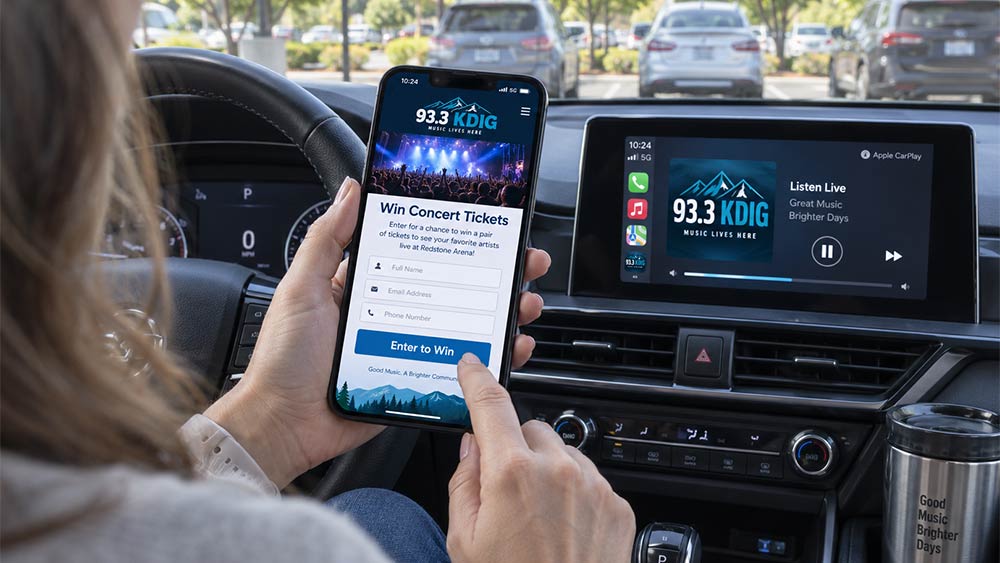
Getting someone to download your radio station’s app is one thing. Giving them a reason to keep it is another. We spend plenty of airtime saying, “Download our free app,” but often spend little time explaining why. If the entire pitch is that they can listen to the station, we’ve given them only one reason. What else happens after they install it?
A good radio station app starts with dependable listening. The play button should be easy to find, the stream should start promptly, and the audio should continue when someone locks their phone or opens another app. Listeners should also be able to read a local story or check your events calendar without interrupting the stream. These sound like basic expectations because they are. No amount of extra features makes up for an app that struggles to play the station.
That listening experience should extend to the dashboard. Apple CarPlay and Android Auto support let compatible audio apps bring listening controls to supported vehicle displays. Both require your app provider to build for those experiences, so don’t assume having a mobile app automatically puts your station there. Ask to see it demonstrated. For a business that depends so heavily on in-car listening, making the station easy to access through these systems deserves serious attention.
Of course, keeping people connected through an app doesn’t always mean keeping their eyes on it. Someone listening for an hour with their phone in their pocket is getting exactly what they wanted. But when listeners do open the app, there should be something worthwhile waiting beyond a logo and a play button.
This is where your local content earns its keep. Community news, upcoming events, school information, local sports, and contests can give people reasons to open the app throughout the week. A listener might arrive to check Friday’s football coverage and end up listening. Another might come to enter a contest and discover something to do this weekend. If your station isn’t a news source, an updated community calendar, local deals, and useful weekend recommendations can still make the app worth keeping.
The content needs somewhere to lead. A story about a community festival should connect people to the event details. An interview should offer a way to hear the full conversation or another recent episode. A contest promotion should take people directly to the entry form. These are simple ways to encourage another useful action while someone is already interested. Making listeners dig through menus to find what you just promoted wastes that interest.
On-demand audio also gives your programming a longer life. Your morning show might have a great conversation with a local coach at 7:20, but plenty of listeners won’t be available then. Put that interview in the app and tell people where to find it. You don’t have to launch five new podcasts to offer something valuable. Start with the material your station already produces that deserves to be heard more than once. Maybe that means turning it into podcasts. Make them easy to access in the app, too.
Push notifications can bring people back, but they need an editorial plan. A relevant local alert, a reminder about a game broadcast, or a contest deadline can be useful. Sending a notification every time anything gets posted is a good way to teach people to turn them off. Where possible, let listeners choose the subjects they want, and make each notification open the specific story, event, or contest it promises. “Tap for details” shouldn’t mean “tap, then go hunting.”
There’s room for participation, too. A quick poll, a way to submit a community photo, or an easy way to contact the studio gives listeners something to contribute. Choose features your staff will actually manage. If nobody checks submissions or responds to messages, the app invites a conversation the station isn’t prepared to have. Many app providers tout lots of cool features that sound amazing, but when it comes down to it, stations find most difficult to maintain long-term.
Advertising should fit into the app experience without making it frustrating. A sponsored local section or a useful offer from a nearby business can give an advertiser meaningful visibility. An ad that repeatedly blocks the content or makes the play button difficult to reach gives listeners a reason to leave. We already understand the need to balance programming and commercials on the air. The app deserves the same consideration.
Finally, someone at the station needs to own the experience. That means checking for outdated content, testing the stream, reviewing listener feedback, and looking beyond total downloads. Are people returning? Are they listening, reading, entering, and responding? Those actions tell you much more than the number of people who installed the app once.
Open your station’s app as a listener this week. Play the stream, read a story, follow a notification, and try it in a compatible vehicle. Then look at your on-air promotion. “Download our app” is a request for space on someone’s phone. “Hear the coach’s interview, find this weekend’s events, and take us along for the drive” gives them a reason to make room if they don’t have it or open it again if they already do.
Pic generated by ChatGPT.
Jim Sherwood is a radio veteran turned digital strategist dedicated to helping radio stations thrive online through engaging websites and mobile apps. As the founder of Skyrocket Radio and host of the Better Radio Websites podcast, he shares best practices to help stations grow audiences and revenue in the digital space. With decades of experience in radio and a passion for connecting content with listeners, Jim ensures that every station—no matter its size—can make a lasting impact online.