

For years, when we talked about getting more people to a radio station website, a lot of the conversation naturally centered around Google. Create good local content, make it search-friendly and give someone looking for that information a chance to find your station.
Now AI search is becoming another part of that equation. Someone looking for information about a road project, school decision, local election or upcoming event may search Google, but they may also ask ChatGPT, Gemini or another AI service. I think that makes good local content even more valuable, but it also brings up something I’ve noticed we tend to overlook.
Google and AI are not the only ways people can find what we create. Radio stations already have a pretty impressive distribution system of their own.
We have the air. We have personalities. We have websites, mobile apps and social media. A growing number of stations have newsletters and podcasts. We may spend an hour putting together a useful local story for the website and then hit “publish” and wait for somebody to find it, even though we have all of these other ways to put that same information in front of people.
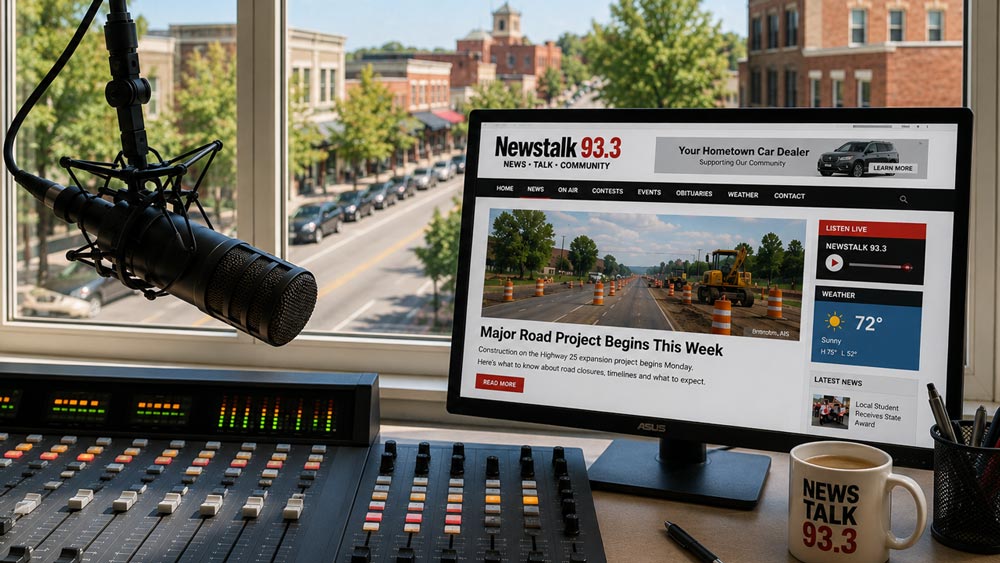
Take a major road project that is going to affect commutes for the next several months. The website is a great place to build the useful version of that information: which roads are affected, what is changing, how long the project is expected to last and links to official updates. Instead of treating it as a story that disappears down the homepage after a few days, keep that page updated as the project changes.
That gives Google something useful to index and potentially gives AI search a good local source to reference. But those are just two ways someone might find it.
Your morning show can talk about what the personalities encountered driving in that morning, ask listeners what they’re seeing and tell them where to find the latest closures. If the traffic pattern changes next Tuesday, that might warrant a push notification through the app. Someone near the construction could shoot a quick video for social media. The next station newsletter could include the latest update. If the morning show interviews the mayor or highway department about the project, that conversation could become a short podcast segment attached to the page.
None of those should simply be copies of the website story. That’s where I think we sometimes get distribution wrong.
The morning show should sound like the morning show. Social media might show what’s happening or ask people how the project is affecting their commute. A push notification needs to tell someone what changed and why they should care right now. The newsletter only needs a sentence or two reminding readers why the information is useful. The website can remain the place where the complete and current information lives. One piece of local content becomes the center of it all.
Newsletters are especially useful because they give stations another chance to bring good content back after the initial attention has passed. Not every story deserves its own email, but a local event, school decision, business opening or continuing public project may fit perfectly into a weekly local roundup. You don’t have to rewrite the story for the newsletter. Tell me why I might want to read it and send me back to the page.
The same applies to audio. Our radio stations create an enormous amount of it every day, and most of it disappears as soon as it airs. If a local issue turns into a good eight-minute morning show conversation, pull out the useful part, give it a title that tells people what it’s actually about and make it available on the website and podcast feed. Someone who wasn’t listening at 7:40 that morning can still hear it that afternoon – or discover it weeks later while looking for information about the subject.
Social media is another piece of the distribution system, but I would rather see it used as an invitation whenever possible instead of the final destination. A Facebook or Instagram post may get attention today, but its useful life is usually short. Sending someone to a useful station page gives that attention somewhere more permanent to land.
And then there is the most obvious distribution channel of all: your radio station.
We sometimes work so hard trying to get people from Facebook or Google to the website that we forget we already have people listening to us. Tell them about the useful things you’ve created. Don’t just say, “Visit our website for more information.” That’s boring. Give them a reason. “We’ve got the complete list of road closures on our website” tells me exactly why I should go there.
This is one of the advantages radio stations have that most local websites would love to have. We aren’t just starting with a webpage and hoping somebody discovers it. We already have an audience and multiple ways to reach them. The website can be the home for the information, while on-air, mobile app, newsletter, social channels and podcasts continually give people reasons to find it.
Google adds another door. AI search is adding another one too. Both are important because they can introduce the station to people who weren’t looking for us at all. They were looking for an answer, and good local content gives us an opportunity to be that answer. But I wouldn’t build a distribution strategy that depends on either one.
Before the next good local story goes live, take another minute and think about all of the ways your station could put it in front of people. Someone once called this “pre-purposing.” Maybe it deserves an app notification. Maybe the morning show should talk about it tomorrow. Maybe it belongs in Friday’s newsletter or becomes a short podcast segment. Maybe social media can introduce it to someone who didn’t know the story existed.
We spend a lot of time talking about creating more content. Sometimes the bigger opportunity is doing more with the good content we’re already creating.
Pic generated by ChatGPT.
Jim Sherwood is a radio veteran turned digital strategist dedicated to helping radio stations thrive online through engaging websites and mobile apps. As the founder of Skyrocket Radio and host of the Better Radio Websites podcast, he shares best practices to help stations grow audiences and revenue in the digital space. With decades of experience in radio and a passion for connecting content with listeners, Jim ensures that every station—no matter its size—can make a lasting impact online.