

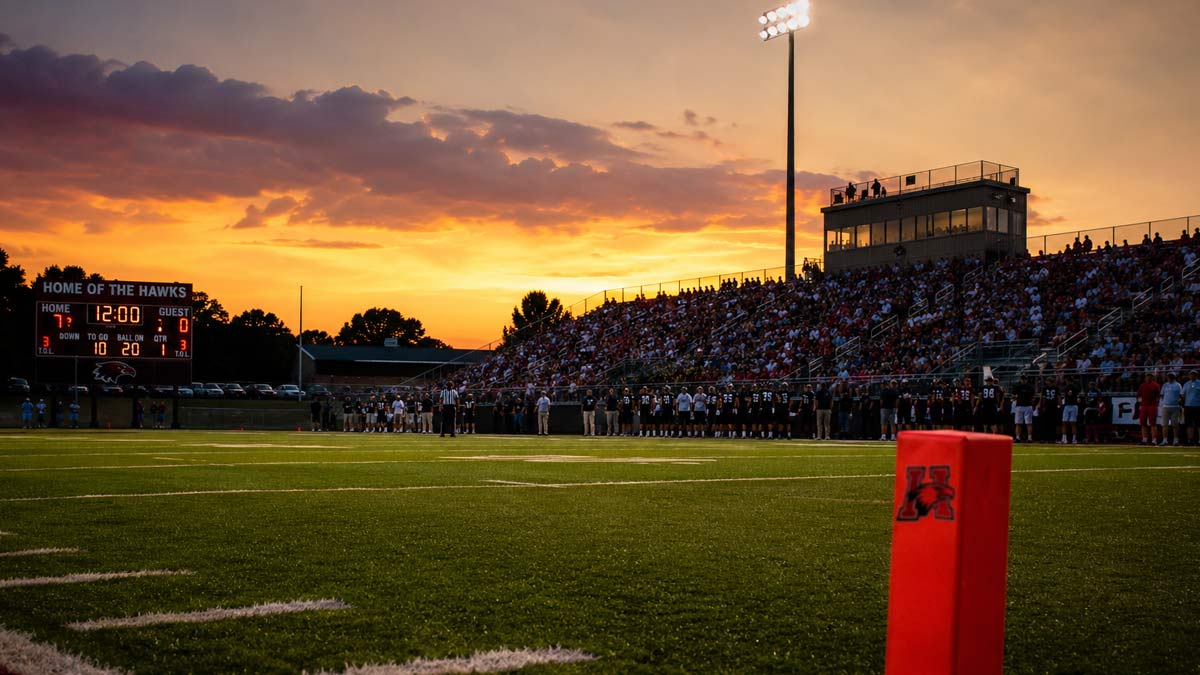
The first big Friday night of high school football is here, and this is one of those times when a radio station website can be incredibly useful without creating a bunch of new content.
Think about everything someone may want to know before heading to a game. Who is playing? What time is kickoff? Where is the stadium? Where should I park? Is there construction around the school?
What does the weather look like around kickoff? Is the game on the radio? Can I listen online or watch a livestream?
Most of that information already exists somewhere. The problem is that “somewhere” may mean the school’s Facebook page, an athletic department post, a weather app, a police department announcement and another website for the livestream. Your sports broadcaster probably knows half of it already. The station may even be talking about most of it on the air throughout the day.
The opportunity is putting it all together so your listeners know where to check first next time.
A high school football schedule on your website should obviously include the teams, date, kickoff time and location. But think beyond the schedule itself. If there is something unusual about getting into the stadium, add it. If visiting fans need to park somewhere different, add that. If road construction changes the normal route to the school, that is useful information, too.
This is where local radio has an advantage. You have people who are already plugged into the community. Someone in the newsroom may see a police department post about a road closure. Your sports announcer may hear that kickoff has been moved 30 minutes because of the heat. Promotions may know about the tailgate happening outside the stadium. Instead of allowing all of those details to live in separate places, use the website to bring them together.
Weather is another easy addition. Nobody needs a three-paragraph meteorological discussion before going to a football game. They want to know if it will still be 90 degrees at kickoff, if rain is expected during the second half or if storms could delay the game. If weather does cause a delay, cancellation or time change, update the page just as you would any other piece of breaking local information.
The same goes for listening and viewing information. If your station is carrying the game, make it painfully obvious how someone can listen. Give them the station frequency, streaming link and mobile app option. Don’t assume they know. If a legitimate livestream is available from the school or another source, link to it. Most importantly, check those links before Friday night. Nothing says “we haven’t looked at this since last season” quite like a big WATCH LIVE button that goes nowhere. So, be sure to test links and live feeds in advance.
Don’t forget about everything surrounding the game, either. Friday night football is rarely just about football. Maybe there is a special halftime performance, hall-of-fame induction, rivalry tradition, youth football recognition or community tailgate. Those are exactly the kinds of details that make your coverage feel local instead of looking like a schedule somebody copied and pasted.
None of this means your radio station needs to become an extension of the athletic department. It just means thinking about the website from the listener’s perspective. If I’m leaving work Friday afternoon and heading to the game, what do I need to know?
That is a pretty good test for the page. Pull it up on your phone. Can you quickly find tonight’s opponent, kickoff time, stadium location, parking information, weather and a way to listen or watch? If something changes at 3:30 Friday afternoon, does someone at the station know that it’s their job to update it?
We talk a lot about giving people reasons to visit a radio station website instead of expecting them to magically develop the habit. High school football season gives you one of those reasons every single Friday night. The scores will eventually be everywhere. Everything someone needs before the game is where your station can really be useful.
Pic generated by ChatGPT.
Jim Sherwood is a radio veteran turned digital strategist dedicated to helping radio stations thrive online through engaging websites and mobile apps. As the founder of Skyrocket Radio and host of the Better Radio Websites podcast, he shares best practices to help stations grow audiences and revenue in the digital space. With decades of experience in radio and a passion for connecting content with listeners, Jim ensures that every station—no matter its size—can make a lasting impact online.