

There’s no doubt that AI is changing radio in ways we could not have imagined even a few years ago. Stations are using it to help write promotional copy, generate blog posts, create social media content, build imaging ideas, summarize interviews, assist with commercial production and even voicing complete shows. Smaller staffs are finding ways to do more with less, and there is no question these tools are helping many stations stay competitive in an increasingly demanding digital environment.
That is the good news.
The danger is when station owners or managers begin believing that because AI can help create content, it can also fully replace the experience and infrastructure needed to operate a real radio station website long-term.
I talked a couple of months ago on my “Better Radio Websites” podcast about the possibility of “vibe coding” station websites. This is where someone uses AI tools to generate code and build an entire website through prompts instead of traditional development. The technology itself is honestly impressive. Today, you can describe a homepage, request a streaming player, ask for a contest page, and AI can build something that looks surprisingly polished in a matter of minutes.
For some types of websites, that may actually be enough. A local business brochure site that rarely changes may survive just fine with AI-generated code and a little maintenance here and there. But radio station websites should never be brochure sites. They are active, constantly changing content platforms that require daily attention and long-term stability.
That is where the conversation changes.
A modern radio station website should be updated throughout the day. News stories change. Local events are added. Closings and weather alerts happen unexpectedly. Contest pages launch and expire. Podcasts are uploaded. Advertisers need banners swapped out quickly. Staff members with different technical skill levels are all touching the site at different times. In many stations, the website becomes a real-time extension of what is happening on the air.
That kind of environment exposes weaknesses very quickly.
The biggest issue I see with AI-built or heavily vibe-coded websites is not necessarily how they look on launch day. Most of them look fine at first. The problem is what happens after months of nonstop content updates. Features that worked initially begin conflicting with plugins or platform updates. Page layouts become inconsistent because different AI-generated solutions were used at different times. Content editors become afraid to touch certain sections because nobody fully understands how they were built. Something as simple as updating a homepage banner can suddenly affect unrelated parts of the site.
Unlike a simple company website, radio stations cannot afford downtime or confusion.
If a local business website has an issue for a few hours, it may not even be noticed. But if your station website breaks during severe weather coverage, a major local event, or a high-profile contest, listeners notice immediately. Advertisers notice too. Reliability matters differently in radio because your website is part of your daily operation, not just your marketing presence.
There is also the issue of workflow. Most AI coding demonstrations focus on building features, not managing content teams. Radio websites are often updated by air staff, promotions directors, sales teams, news contributors, and managers – all with varying levels of technical comfort. A website needs structure and consistency that works well for non-technical users making quick updates multiple times per day.
That is much harder than generating code from prompts.
Over the years, I have seen plenty of stations attempt the DIY route because the upfront cost looked attractive. What usually happens is the station ends up with a collection of disconnected tools and temporary fixes that become harder to maintain over time. One person becomes “the website person,” and eventually, everything depends on them. If they leave, nobody wants to touch the system because it has become too fragile or complicated.
AI can accelerate that problem if there is no underlying strategy behind the build. There is a difference between using AI to support your content operation and trusting AI to architect the entire digital foundation underneath it.
The reality is that radio station websites are operational platforms. They require planning, scalability, maintenance, security, usability, and workflows designed around constant updates. They need to function reliably not just today, but six months and three years from now after thousands of posts, contests, events, and updates have been added.
That is why I believe vibe coding can absolutely be part of the future, but it cannot replace experience, process, and long-term thinking when it comes to radio station websites. The more active and content-driven your station becomes online, the more important those things actually are.
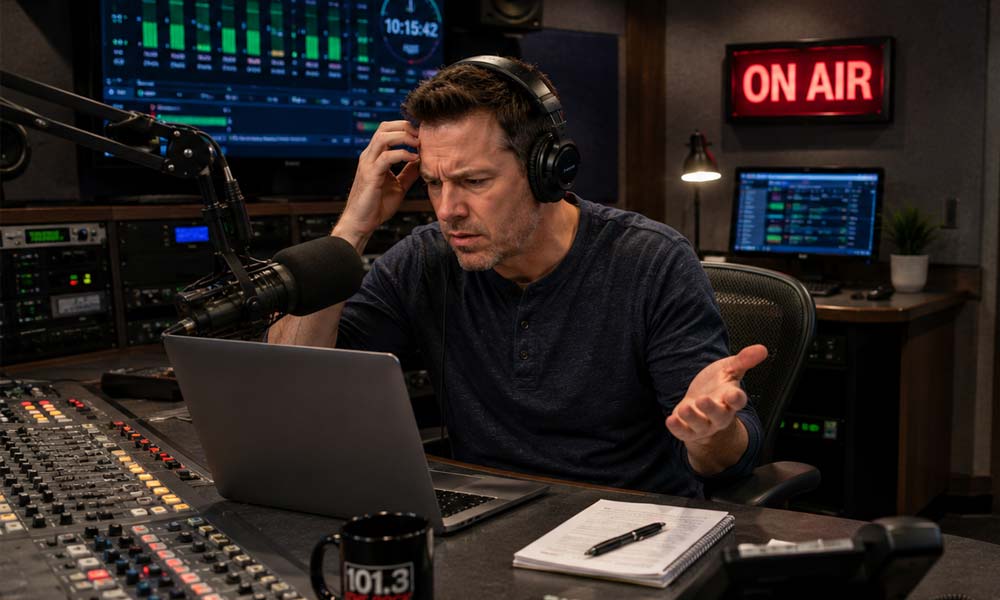
Pic generated by ChatGPT.
Jim Sherwood is a radio veteran turned digital strategist dedicated to helping radio stations thrive online through engaging websites and mobile apps. As the founder of Skyrocket Radio and host of the Better Radio Websites podcast, he shares best practices to help stations grow audiences and revenue in the digital space. With decades of experience in radio and a passion for connecting content with listeners, Jim ensures that every station—no matter its size—can make a lasting impact online.