

Over the years, I’ve probably had the same conversation with dozens of radio stations. We’ll be talking about their website, local news, or ways to increase traffic, and I’ll ask, “How many local pictures do you have in your media library?”
Not images attached to stories. Not logos. Not sponsor artwork. I mean pictures of the community you serve. The courthouse. Police and fire stations. Schools. Parks. Local businesses. Water towers. Churches. Downtown streets. Neighborhoods. The places that define your town. The answer is almost always the same. “We’ve got some.” Then we look and notice that most stations have far fewer than they thought.
The interesting thing is that nobody sets out to ignore building a local image library. It’s just one of those projects that never seems urgent because there are always more immediate things demanding attention. Before long, another month has gone by, and nobody has taken a single photo that wasn’t tied to an immediate need.
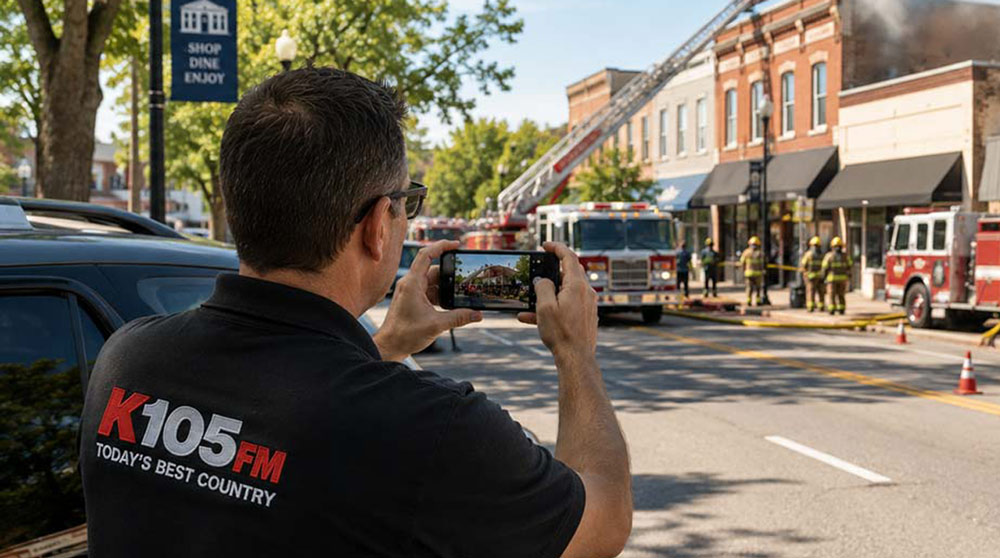
The irony is that those same stations are often the first to find themselves searching for an image when news breaks. I’ve been there dozens of times. A fire happens downtown, and suddenly everyone is looking for a picture of the building. The school board votes on something controversial and someone realizes there isn’t a decent photo of the school anywhere in the media library. A new business opens, severe weather rolls through town, a police investigation begins, or the county fair comes around again, and the scramble starts all over. Somebody searches a stock photo site. Someone else asks if there’s anything on Facebook that can be used. Finally, you end up with an AI image of something that clearly isn’t in your local community. The story is local. The image isn’t.
I’ve always thought that radio stations are in a great position to build an incredible local image database. Think about where your people go every day. Salespeople are visiting businesses across the market. The morning show is at remotes and community events. News people are covering meetings. Promotions is setting up somewhere almost every weekend. Even engineering spends time at places most listeners never see. Between everyone on staff, nearly every important landmark in the community gets driven past regularly.
In other words, the opportunities are already there. Everyone has a smartphone with an amazing camera, so there is no challenge in finding someone to take the pictures.
I’ve encouraged stations for years to make it a habit. If you’re already at the county courthouse, spend another two minutes taking a handful of good photos before you leave. If you’re calling on the new hospital, grab a few pictures while you’re walking in. If you’re broadcasting from the county fair, photograph the entrance, the midway, the livestock barns, and the grandstand while you’re there. Nobody needs those pictures today, but chances are very good you’ll need them someday. Keep doing that week after week and, before long, you’ve built something incredibly valuable.
Almost every station I’ve suggested this to has agreed it was a great idea. Very few actually did it. For a long time, I couldn’t figure out why, and then it finally hit me. Taking the pictures was never what people were resisting. It was everything that came after. The moment someone takes a picture, another question immediately pops into their head. “Now how do I get it to the website?”
Do I text it to someone? Email it? AirDrop it? Upload it to Dropbox? Put it in Google Drive? Wait until I get back to the station? Remember to do it tonight? Every extra step makes it a little less likely that the picture ever leaves the phone. Eventually it’s buried beneath family photos, screenshots, and vacation pictures, and that image of the courthouse you wanted six months later may as well not exist. So, why think about taking the photo if I know subconsciously that I will never send it?
Once I realized that, the solution became obvious. The problem wasn’t convincing people to take more pictures. The problem was removing the pause that happens immediately after they take one. That’s why I built a new app called CaptureRelay.
The entire goal was to eliminate the steps between taking a local photo and having it available inside the station’s website. Open the app, snap the picture, give it a title, tap Send, and a few seconds later it’s sitting in the media library where everyone on the staff can find it. No emails. No cloud folders. No reminders. No wondering who has the photo. And, most importantly, no editing or optimizing for the web. Snap… Send… It’s on your WordPress website.
For years I’ve believed that one of the most valuable assets a local radio station can own is a growing library of authentic images from the community it serves. Not because they’re beautiful photographs, but because they’re ready when the next story breaks.
CaptureRelay wasn’t created to convince stations they needed a local image database. It was created because I finally realized what had been keeping them from building one all along.
Whether you give CaptureRelay a try or not, I hope you’ll make it a priority to build a local image library for your station’s website. You’ll be surprised how often those photos become the difference between scrambling for an image and already having exactly what you need when news breaks.
Pic generated by ChatGPT.
Jim Sherwood is a radio veteran turned digital strategist dedicated to helping radio stations thrive online through engaging websites and mobile apps. As the founder of Skyrocket Radio and host of the Better Radio Websites podcast, he shares best practices to help stations grow audiences and revenue in the digital space. With decades of experience in radio and a passion for connecting content with listeners, Jim ensures that every station—no matter its size—can make a lasting impact online.
1 thought on “Why Every Radio Station Needs a Local Image Library”
Pingback: Radio Update Top 10 Content - Radio Update