

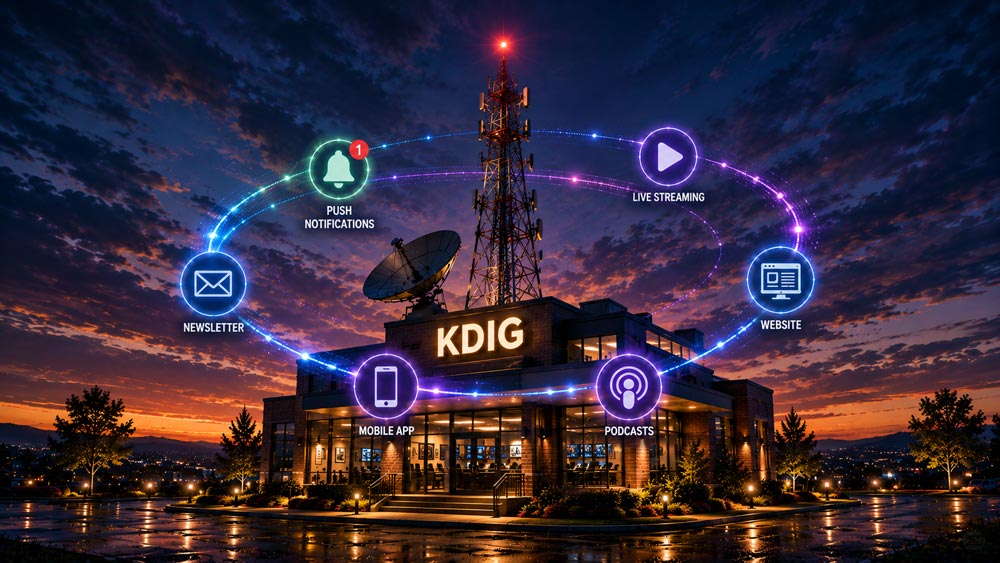
We have always built our business around one of the most valuable assets any media company can possess: a direct relationship with our audience. Long before social media platforms, we connected with listeners with our signal, community events, contests, and local personalities. That relationship was immediate, personal, and, most importantly, it belonged to us.
That dynamic has been changing for some time. While radio remains one of the most effective ways to reach local audiences, many stations have become increasingly dependent on digital platforms they do not control. Social media networks, search engines, and content aggregators now play a significant role in how listeners discover and interact with media. These tools can be incredibly valuable, but they also introduce a challenge that every station manager should consider: when someone else owns the platform, they also control access to your audience.
The digital landscape has always evolved, but recent changes have accelerated the importance of owning your audience. Search engines are increasingly providing answers directly within search results. Social media algorithms continue to determine which posts receive visibility and which disappear into the background. Artificial intelligence tools are beginning to summarize and distribute information without requiring users to visit the original source. Each of these developments creates new obstacles for organizations that rely heavily on these third-party platforms for audience engagement.
This does not mean stations should abandon social media or stop optimizing for search. Quite the opposite. These remain important tools for attracting new listeners and expanding awareness. The key distinction is understanding the difference between audience acquisition and audience ownership.
A Facebook follower is not truly your audience. An Instagram follower is not truly your audience. A listener who discovers your content through a search engine is not necessarily your audience either. Those relationships exist within environments controlled by someone else. The platform decides who sees your content, how often they see it, and under what circumstances they are exposed to competing content.
By contrast, an email subscriber belongs to a direct communication channel you control. A listener who has installed your mobile app has invited your station onto one of the most personal devices they own. A podcast subscriber has chosen to receive your content automatically. These relationships are fundamentally different because they are not dependent on changing algorithms or platform policies.
History provides several examples of why this distinction matters. Years ago, many businesses invested heavily in building large Facebook audiences because organic reach was strong. Over time, Facebook changed its algorithms, dramatically reducing the percentage of followers who would see unpaid content. Organizations that had relied exclusively on social media suddenly found themselves paying to reach audiences they believed they had already earned.
Search traffic has followed a similar pattern. For years, websites focused heavily on ranking in search results because search engines reliably delivered visitors. Today, search engines increasingly answer questions directly on the results page, reducing the need for users to click through to websites. Publishers across multiple industries are experiencing the impact of this shift as website traffic patterns change.
The lesson is not that these platforms are bad. Rather, it is that every platform serves its own business interests first. A radio station’s responsibility is to serve its listeners while building sustainable audience relationships that cannot be disrupted by decisions made in distant corporate boardrooms.
For local radio stations, this presents both a challenge and an opportunity. National media brands have enormous resources. Technology companies have sophisticated algorithms. Yet local stations possess something many of these competitors cannot replicate: genuine connections within their communities.
Listeners still want local information. They want to know about school events, high school sports, community celebrations, local government decisions, weather emergencies, and charitable initiatives. They want familiar voices who understand the communities they serve. These strengths create opportunities to build direct audience relationships that extend beyond your broadcast signal.
Stations that consistently convert casual listeners into email subscribers, app users, podcast subscribers, and regular website visitors create a more resilient digital presence. Each of these touchpoints strengthens the connection between the station and its audience while reducing dependence on any single platform.
This approach also provides significant business advantages. Direct audience channels offer better opportunities for sponsorships, promotions, contests, and community engagement. They generate valuable first-party audience insights and create additional ways for advertisers to connect with local consumers. Most importantly, they provide stability in an environment where change has become the norm. This fact is sellable.
The stations that thrive in the years ahead will not necessarily be the ones with the largest social media followings or the most viral content. They will be the stations that understand the value of building direct relationships with their audiences and consistently invest in channels they control.
Technology will continue to evolve. New platforms will emerge, and existing platforms will change. Search engines, social networks, and artificial intelligence tools will continue to influence how people discover content. Those developments are inevitable. What remains constant is the value of owning the relationship with your audience.
Audience ownership has become more than a marketing strategy. It is a long-term business strategy that helps ensure your station’s ability to inform, engage, and serve its community for years to come.
Pic generated by ChatGPT.
Jim Sherwood is a radio veteran turned digital strategist dedicated to helping radio stations thrive online through engaging websites and mobile apps. As the founder of Skyrocket Radio and host of the Better Radio Websites podcast, he shares best practices to help stations grow audiences and revenue in the digital space. With decades of experience in radio and a passion for connecting content with listeners, Jim ensures that every station—no matter its size—can make a lasting impact online.
1 thought on “Why Owning Your Audience Matters More Than Ever”
Pingback: State of Media Report Offers Encouraging News for Radio’s Digital Future - Radio Update