

I’ve been thinking a lot lately about how people actually consume content – not how we measure it, not how we hope they use it, but how it really fits into their daily lives. And the more I pay attention to it, the more obvious it becomes that most content consumption today isn’t active at all. It’s passive.
People are less likely to sit down with the intention of, “I’m going to listen to something now.” Content just follows them throughout the day. It’s in the car, in the background at work, playing through earbuds while they’re doing something else entirely. Podcasts, YouTube, streaming audio – it’s all filling the gaps in between everything else going on in their lives.
That’s not a shift away from audio. If anything, it’s the opposite. Audio has become more embedded in everyday life than ever before. But the way people access it – and the expectations around it – have changed.
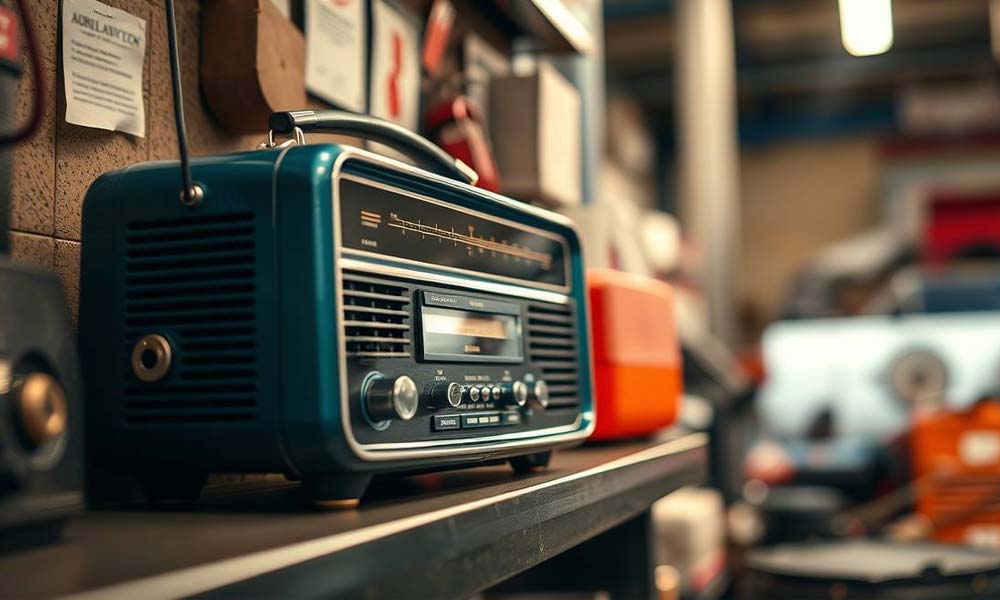
What’s interesting is that radio was built for this exact kind of behavior. Long before smartphones and apps, radio was the original passive medium. It was always there in the background, keeping people company while they worked, drove, or just went about their day. That hasn’t changed. What has changed is that radio is no longer the only option filling those moments.
I was watching a recent episode of “TWiRT – This Week in Radio Tech” on YouTube, where radio consultant Mike McVay was talking about podcasting. I’ve written and talked about podcasts before, so none of that was new territory. But he made a point that really stuck with me because it was so simple.
One of the objections he mentioned came from a station owner who said, “If I promote a podcast and they go listen to that podcast, they’re not listening to my station. So, I’ve lost a listener.” His response was to the point of, “that listener is looking for something other than what you’re doing, so promote other ways that keep them in your world longer.”
That shift is difficult for some, but it’s true. Listeners aren’t choosing between radio and podcasts. They’re choosing based on what they need right now.
And that idea goes a lot further than audio.
Because in that moment, the listener isn’t thinking about platforms at all. They’re not thinking, “I’d prefer a podcast over radio,” or “I should be watching a video instead of listening.” They’re simply looking for something – something specific, something timely, something that fits what they’re doing right then. And whatever delivers that most easily is what wins.
That could be a podcast. It could just as easily be a YouTube clip, a TikTok video, a social post, or something they stumble across in a search. The platform doesn’t matter nearly as much as the accessibility.
That’s where this becomes a bigger conversation for radio.
For years, the goal was to get people to tune in. Everything pointed back to that one action. But today, the opportunity is much broader. It’s not just about getting someone to listen live. It’s about making sure your station shows up wherever your audience is already spending time.
Because they’re going to spend that time somewhere.
If they’re scrolling, watching, searching, or listening, those moments are going to be filled – whether you’re part of them or not. And if your content only exists in one place, you’re naturally limiting how often you can be part of your audience’s day.
The stations that are starting to figure this out aren’t necessarily doing more work. They’re just getting more mileage out of what they’re already creating. A great on-air break doesn’t have to disappear after it airs. It can live as a clip. A conversation can become a video. A moment can turn into something shareable. The same content, just extended into more places.
That’s how you create more touch points.
And those touch points matter, especially for the growing number of people who may never interact with your station in the traditional way. They may not own a radio. They may never download your app. But they’ll watch a video, or follow a page, or click on something that catches their attention.
That still counts. In fact, it might be the first step toward becoming a listener later on.
It’s easy to think of all these platforms as competition. Sure, they can be, if you’re not taking advantage of them. I like to view them as distribution – more opportunities to stay connected to your audience even when they’re not listening to your stream.
Because at the end of the day, you’re not just competing with other stations anymore. You’re competing with everything that fills time. And the brands that win aren’t the ones that protect a single platform – they’re the ones that show up in as many relevant places as possible.
Radio already has the hardest part figured out. You have content being created every day. You have personalities. You have local connection. What’s changed is how far that content can go.
And the stations that embrace that – who stop thinking in terms of “either they’re listening or they’re not” and start thinking in terms of “how often can we show up in their day” – are the ones that are going to stay relevant.
In a time where so much media is consumed passively, the goal isn’t just to be heard when someone tunes in. It’s to be present in the moments in between.
The drive to work. The scroll through a feed. The video that plays while something else is going on.
The opportunity isn’t to reinvent what radio does best. It’s to take ownership of passive content again—this time, everywhere your audience already is.
Pic generated by Leonardo.AI
Jim Sherwood is a radio veteran turned digital strategist dedicated to helping radio stations thrive online through engaging websites and mobile apps. As the founder of Skyrocket Radio and host of the Better Radio Websites podcast, he shares best practices to help stations grow audiences and revenue in the digital space. With decades of experience in radio and a passion for connecting content with listeners, Jim ensures that every station—no matter its size—can make a lasting impact online.