

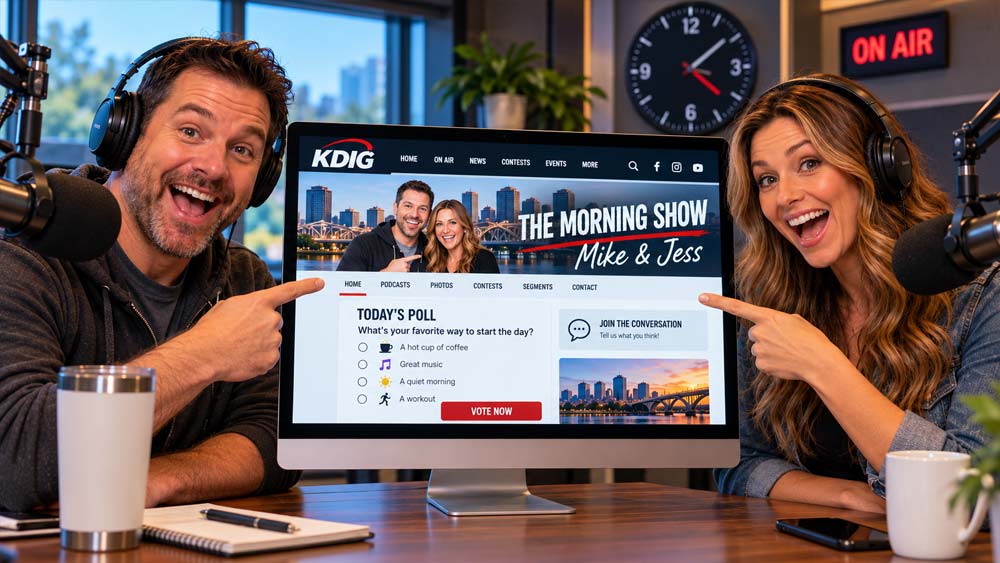
Every radio station has a show that seems to carry more influence than the others. It might be the morning show that’s been part of the community for years, an afternoon personality with a loyal following, or a local talk show that gets people discussing what’s happening around town. These shows have something valuable that a station website often struggles to build on its own: a daily relationship with an audience.
That relationship can have a tremendous impact on website traffic, provided the people behind the microphones make the website part of their show.
Think about how often a popular morning show gives listeners something to talk about. There’s a funny conversation, a local controversy, an interview, or perhaps a contest that gets everyone involved. Most of that content has a natural place on the station website. Photos, polls, extended interviews, and related stories give listeners a reason to visit. The website becomes an extension of the show rather than a separate destination that occasionally gets mentioned. The real opportunity, however, extends well beyond the show’s time slot.
A morning show that consistently sends listeners to the website can influence traffic throughout the entire day. Listeners who hear the website mentioned regularly begin to associate it with the station’s personalities and content. They may visit during the show, but they might just as easily check it during lunch, after work, or later that evening. That’s the value of top-of-mind awareness. The website becomes a familiar destination, even when the personality who introduced it isn’t on the air.
This doesn’t happen by simply telling listeners to visit the station website. There needs to be a reason. A personality saying, “We’ve posted the pictures on our website,” is much more effective when those pictures are part of a conversation listeners are already interested in. Better yet, the show can revisit that content later, share listener responses, or bring the discussion back the following morning. Each mention reinforces the connection between the program and the website.
There’s also an opportunity to build habits. Imagine a morning show that regularly features a local question of the day, with voting and results available on the website. Or a personality who highlights an interesting local story each morning. Over time, listeners learn that visiting the website is another way to participate in the show. Once they’re there, they may discover local news, events, contests, and other content that brings them back independently.
And this is where the website has an advantage over social media. Stations spend considerable time encouraging listeners to follow them on Facebook or Instagram, where their content competes with everything else in someone’s feed. There’s certainly value in social media, but those platforms control how often your content appears and who sees it. When listeners develop a habit of visiting your website directly, you aren’t depending on an algorithm to bring them back. Social media can still introduce people to your content, but the website should be the destination where that relationship continues.
This is where one show’s involvement can begin influencing the entire station’s digital performance. Increased visits to a particular feature can introduce listeners to other parts of the website. Some may subscribe to a newsletter, enter a contest, or return later to check a local event. Those additional visits also create more opportunities for advertisers whose messages appear throughout the site.
Of course, the station should be measuring this activity. Look at website traffic during the show’s hours, but don’t stop there. Watch what happens later in the day. Are direct visits increasing? Are more people returning without coming through social media? Are the pages mentioned on the air getting more attention? Google Analytics can help identify these patterns over several weeks rather than judging the results of a single promotion.
One obstacle I’ve seen is the disconnect between what happens in the studio and what happens on the website. The people responsible for the website may be posting news, updating contests, and maintaining content while the station’s most recognizable personalities rarely mention any of it. Meanwhile, those personalities are creating interesting conversations every day that could easily generate additional online engagement. Both sides have something the other needs, but nobody is connecting the dots.
Every show should promote the website throughout the day, but this week, focus on the show that already has the strongest relationship with listeners. Give that show something worthwhile to promote, make it easy to find, and incorporate the website naturally into the program. Then watch what happens to traffic, not just during the show, but across the rest of the day.
Your most popular show already knows how to bring listeners back to the radio. With a little coordination, it can help bring those same listeners back to your website, without relying on social media to make the introduction every time.
Pic generated by ChatGPT.
Jim Sherwood is a radio veteran turned digital strategist dedicated to helping radio stations thrive online through engaging websites and mobile apps. As the founder of Skyrocket Radio and host of the Better Radio Websites podcast, he shares best practices to help stations grow audiences and revenue in the digital space. With decades of experience in radio and a passion for connecting content with listeners, Jim ensures that every station—no matter its size—can make a lasting impact online.