

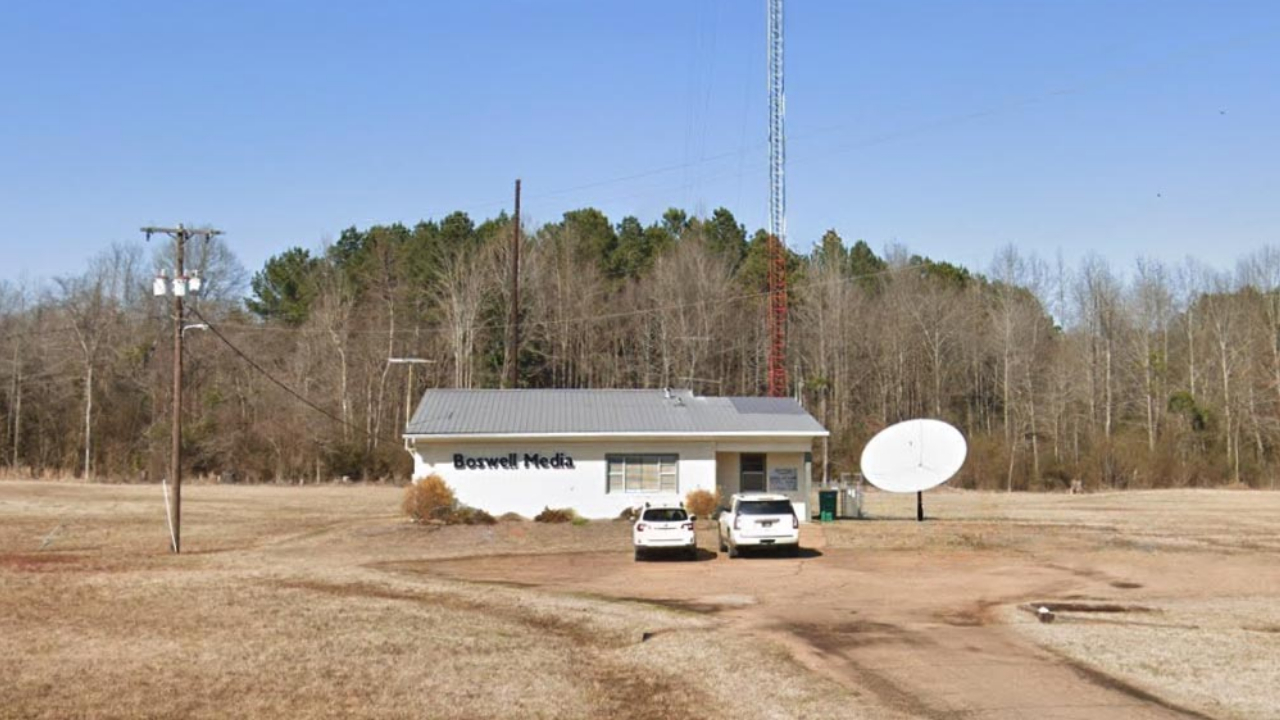
Back in the mid-1990s, when most of the radio industry was still trying to figure out what the internet was going to become, Johnny Boswell was thinking differently – looking past the novelty and to something more permanent. At the time, the prevailing attitude in broadcasting was that a website’s job was to provide listeners with an easy way to find the phone number. The web was interesting, but it wasn’t yet viewed as a vital part of any business.
Johnny is the owner of Breezy 103 in Kosciusko, Mississippi. His philosophy was unconventional: if the station talked about something on the air, it should live on their website as well. Local news, obituaries, community announcements, high school sports, weather updates – if it mattered enough to broadcast, it mattered enough to publish online. That thinking led to the creation of BreezyNews.com. Archive.org records show the first screenshot from 2001, and it was already being tracked as far back as 1996.
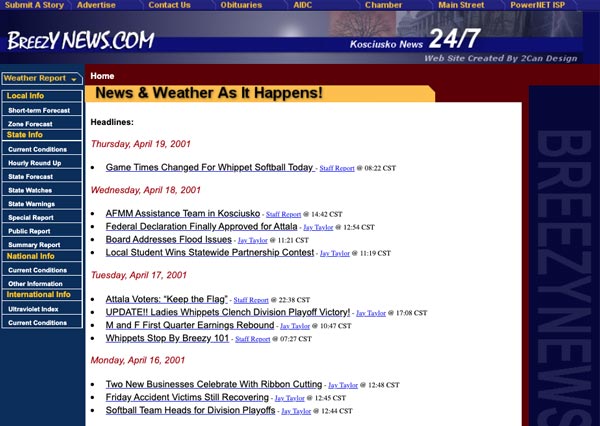
To understand how unusual this mindset was, you have to remember what most station websites looked like at the time. If they had one at all, they were little more than digital brochures: a logo, a staff photo, a contact page, and perhaps a guestbook. Remember those? The radio station was the product, and the website was an unnecessary accessory.
Johnny approached it from the opposite direction. He didn’t see himself as running a radio-only company. He saw his operation as a content company that used radio as one of several ways to distribute information. Once you adopt that mindset, the role of the website changes immediately. It’s no longer optional or secondary. It becomes another transmitter – one that never goes out of range.
Kosciusko, Mississippi, is not a large market by any measure. The town has roughly 6,700 residents, and the county has around 18,000. By traditional radio math, you might assume that limits how big the digital audience could ever become. But content doesn’t follow signal contours. When a station consistently publishes local information online, the audience extends far beyond the people who live within the coverage area. Former residents check in to see what’s happening back home. Family members search for obituaries and announcements. Businesses, alumni, and community groups look for updates they can’t find anywhere else. Search engines send people in from outside the market every day.
That’s how a site like BreezyNews.com can generate hundreds of thousands of page views a month. Please let that sink in. Hundreds of thousands of visitors each month in a county of only 18,000 people. There was no viral gimmick, no national clickbait strategy, and no sudden overnight spike. The growth came from a habit that started decades ago: the minimal staff simply published everything they were already talking about on air.
That discipline is what most stations underestimate. Johnny didn’t create an entirely new workload; he simply documented the work the station was already doing. If there was a wreck in the county, it went online. If the city council met, it went online. If a school announced a schedule change, it went online. If an event was mentioned on the air, it had a home on the website. Over time, those individual posts became a searchable archive, and that archive became traffic. Every article turned into another entry point. Every entry point created another opportunity for advertising, sponsorship, and audience measurement.
Many stations still treat their website as a side project that gets attention when someone has extra time. Breezy treated theirs as an extension of the newsroom. That difference in philosophy is what separates a site that sits idle from one that becomes part of the daily routine for a community.
The larger lesson here isn’t just about posting more articles. It’s about identity. When a broadcaster thinks of the company strictly as a radio station, the website feels optional. When the company sees itself as a content provider, the website becomes essential. Radio is one distribution channel. The website is another. Mobile apps, email newsletters, and social media are others. None of those platforms are the business by themselves. The business is the content, and the platforms are simply the ways that content reaches people.
That idea is discussed frequently today under terms like “multi-platform strategy” or “digital-first thinking,” but Johnny Boswell was putting it into practice long before those phrases appeared in conference sessions.
For stations looking at their own digital performance today, the takeaway isn’t that every site needs a redesign or a new SEO strategy. The first question is much simpler: are you publishing everything you’re already creating? If the newsroom prepares a story for the air, does it also become a web article? If the morning show talks about a local event, does it get posted? If the station reads obituaries, weather alerts, or school closings, do those updates live online where people can find them later?
When that habit becomes part of the daily workflow, the results compound over time. Search traffic grows. Direct visits grow. Advertisers see measurable audience. The website stops being a placeholder and starts becoming a product.
BreezyNews.com isn’t successful because it looks flashy or because it follows every new digital trend. It’s successful because it has been consistent for nearly three decades, and consistency is one of the few advantages small-market stations still control completely.
In an industry that often looks for quick fixes, that long-term approach may be the most important lesson of all.
Jim Sherwood is a radio veteran turned digital strategist dedicated to helping radio stations thrive online through engaging websites and mobile apps. As the founder of Skyrocket Radio and host of the Better Radio Websites podcast, he shares best practices to help stations grow audiences and revenue in the digital space. With decades of experience in radio and a passion for connecting content with listeners, Jim ensures that every station—no matter its size—can make a lasting impact online.