

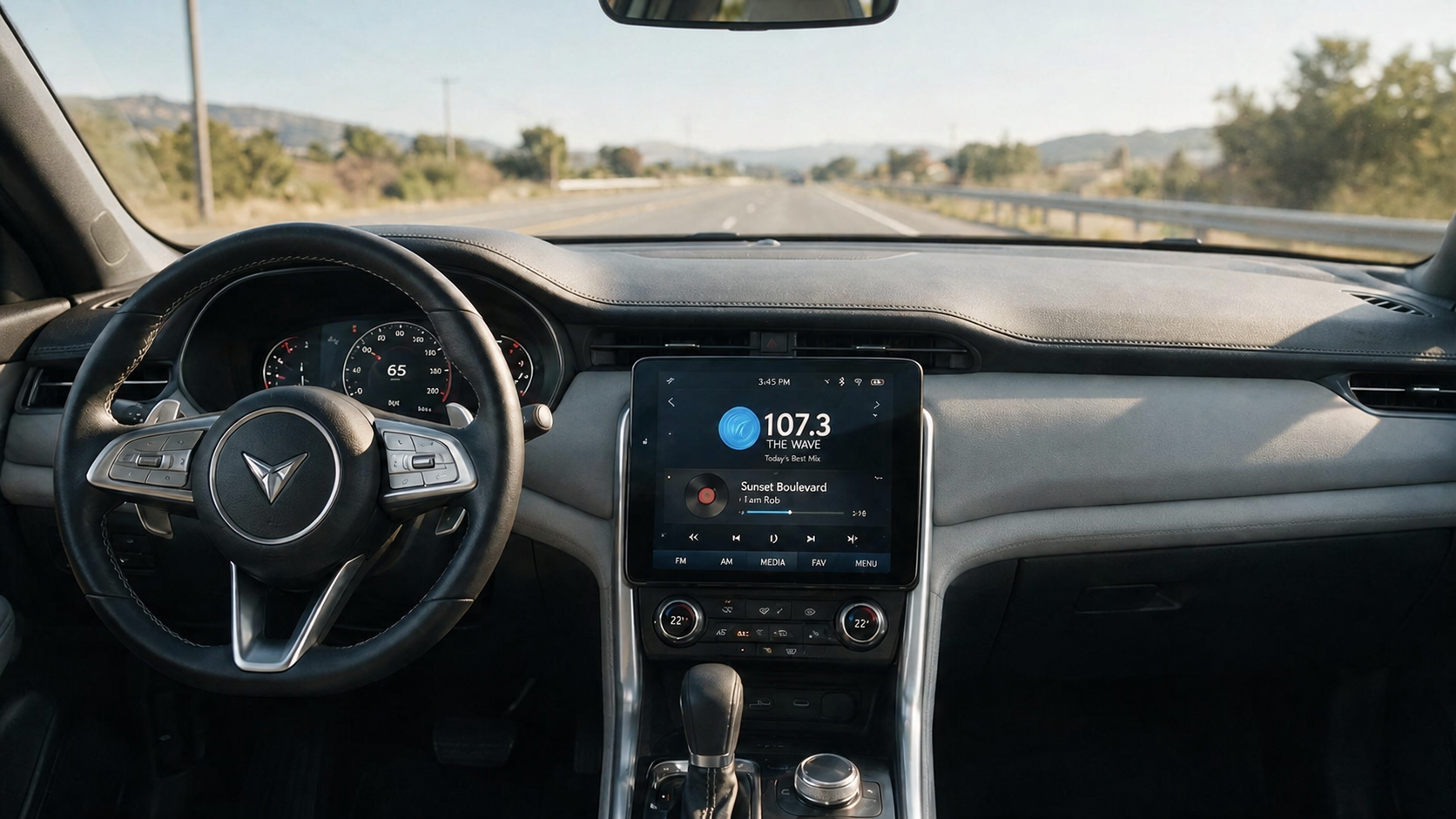
Last week at TAB I sat in a session with Xperi’s Juan Galdamez entitled “Dayparts & Dashboards: Navigating Radio’s Big Data Moment”. In the session Juan shared a peek behind the curtain to show us some insights they are getting from the 500,000 vehicles equipped with DTS AutoStage across the state of Texas. As regular readers know I’m a big proponent of terrestrial radio improving how we look in the dash to help us keep our share of that prime real estate. DTS is certainly helping with that but what I, and seemingly everyone that attended Juan’s session, walked out wondering was whether DTS has gotten to a point where they’re a viable alternative to Nielsen. Here are some thoughts on that.
When DTS just had a few makes and models there was a viable argument that it wasn’t an accurate representation of the listening habits of an entire market. Now that they’ve added a lot of additional makes and models, ranging from economy to luxury vehicles, I no longer think that argument holds any water. Especially because their sample base far exceeds Nielsen’s, especially in PPM markets. That sample size grows by the day as well; most markets have seen a minimum of 50% growth from this time last year. As of today, DTS Autostage is available in select Nissan, Ford, Lincoln, Hyundai, Genesis, BMW, Mercedes, Mini, Tesla and Infiniti models.
Their data is also available to broadcasters much closer to real-time. As of right now it’s 24 hours later and I could see that getting faster down the road. Either way it’s a huge improvement for stations in two-book markets that wait with bated breath to get their ratings report card every six months. Then make crucial decisions off of data that’s outdated by the time they get it.
The one big difference, and admittedly it is a big one, is demographic data. Since DTS has no way of knowing who’s in the car listening they can’t currently share any demographic data with us. Although I’ve heard rumors that might begin to change next year. However, it’s unclear how. Obviously, someone knows who each car is registered to but getting that info is tricky and that only covers the person occasionally driving. I can imagine some invasive ways of getting demographic info on everyone in the car in the future, like sensors or cameras, as well as some less invasive ways like letting passengers and drivers to setup profiles. In the interim I think we can pair DTS data with the demographic info we collect through our major contests provided we’re doing at least one or two of those per year.
However, even without the demographic data, DTS is well aware of how valuable the data they already have is. So, as of May of this year they began charging for it. Stations can still sign up for free to display their station logo. But, to get access to the data and metrics stations must pay a fee that ranges by market. Although right now DTS is still cheaper than Nielsen, I would wager that Nielsen will continue lowering their rates and DTS will likely raise theirs and they will soon meet in the middle. That’s why I think it’s wise for stations to lock in a deal with DTS now, even if that means double dipping by overlapping with Nielsen for a while.
Outside of the data and improving the look in the dash there are other advantages to DTS as well, especially in connected cars. It allows stations to automatically switch to the stream when they leave the terrestrial coverage area, to push listeners to on-demand audio and podcasts and do all kinds of things to display anything we can send the metadata for.
What do you think, will DTS replace Nielsen now or sometime soon? Comment below or email me at Andy@RadioStationConsultant.com.
Pic AI generated using Envato Elements.