

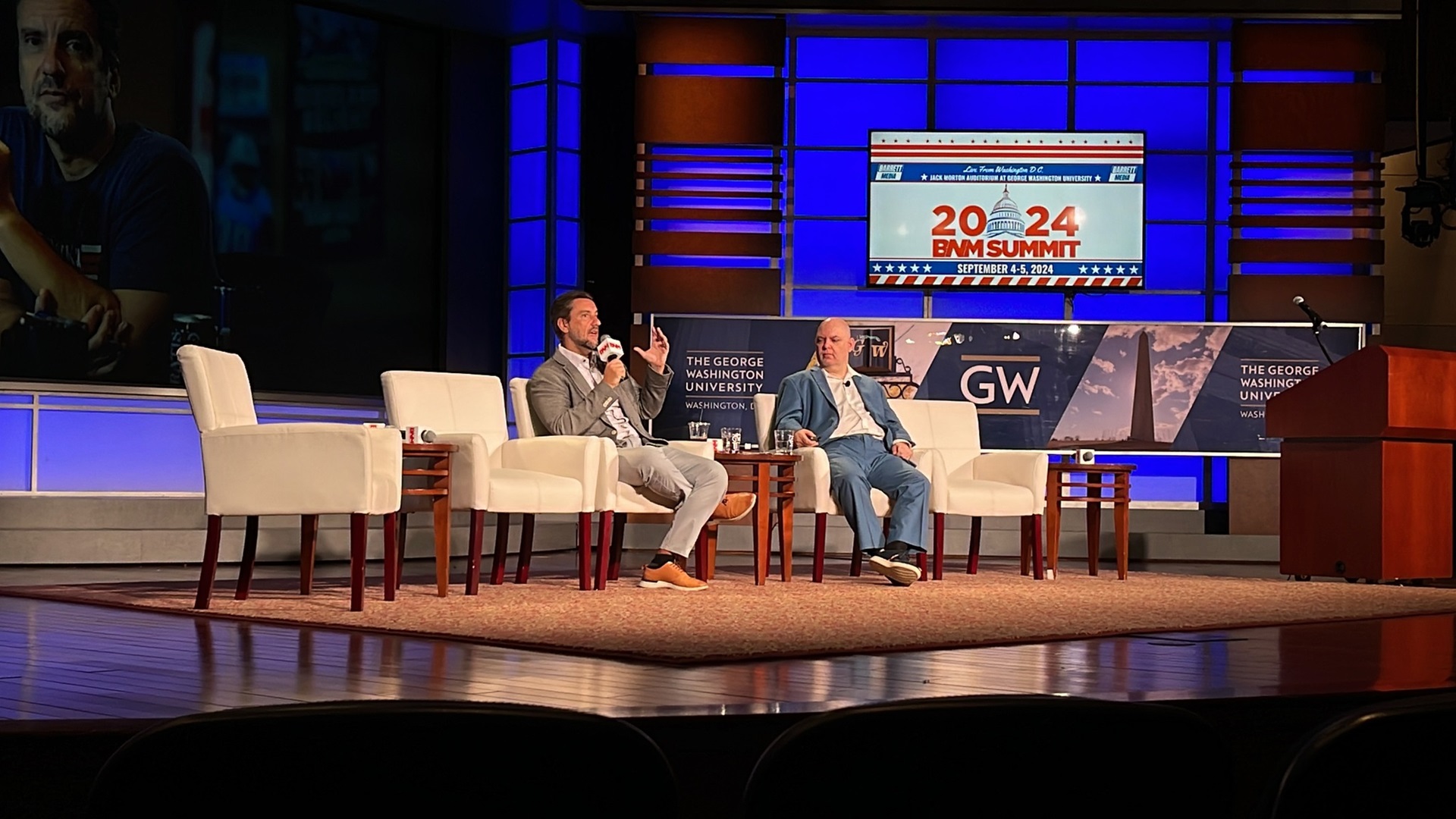
At last week’s 2024 Barrett News Media conference in Washington, DC, the buzz around podcasts was undeniable, but it became clear that spoken word radio isn’t ready to surrender to the podcast boom. While podcasts have surged in popularity over the past decade, live radio, especially in the spoken word format, remains a dominant and influential force. Radio is leveraging its unique strengths—immediacy, local relevance, and accessibility—qualities that podcasts struggle to match.
Statistically, radio’s reach remains formidable. According to Nielsen, over 83% of Americans aged 12 and older still listen to radio weekly, with spoken word formats accounting for a significant portion of that. In contrast, about 42% of Americans are estimated to listen to podcasts weekly. While podcasts are clearly gaining traction, particularly among younger audiences, radio’s vast reach across all demographics remains unmatched. Radio’s audience is not confined to niche categories; its content, particularly in spoken word formats like news talk and sports, is broadly consumed across different age groups, professions, and lifestyles.
The most significant advantage radio holds over podcasts is its live, real-time nature. At Barrett, industry leaders emphasized that spoken word radio thrives on its ability to provide breaking news coverage, live traffic updates, emergency alerts, and immediate commentary on current events. Podcasts, while excellent for deep dives and specialized content, cannot offer the same real-time relevance. When a major event occurs, listeners don’t turn to a podcast—they turn on the radio. This immediacy keeps radio firmly rooted in the daily habits of millions of Americans.
Local relevance also plays a crucial role in radio’s continued strength. Spoken word radio, especially at the community and regional levels, offers something that most podcasts can’t: a hyper-local focus. Radio connects with listeners on issues that matter directly to their lives—whether it’s city council news, local sports, or community events. This connection to place, particularly in smaller markets, gives spoken word radio a sustained advantage. Local radio hosts know their audience in a way that national podcast hosts often do not, building a personal relationship over time that fosters loyalty.
Furthermore, radio’s accessibility is unparalleled. You don’t need an app, a subscription, or specific knowledge of how to navigate a digital platform to access spoken word radio. This ease of use has sustained radio’s broad reach, especially during commuting hours or for individuals in rural areas without reliable internet. According to a study by Edison Research, 62% of Americans say they still listen to radio in their cars, while only 28% tune into podcasts .
Barrett attendees repeatedly noted that podcasts and radio can coexist, and neither is necessarily destined to eclipse the other. Spoken word radio thrives on its ability to be live, local, and immediately relevant. As it continues to innovate and adapt to digital trends, it’s clear that the format is not conceding to podcasts but rather carving out its space alongside them.
While podcasts have undeniably carved out an important niche in the media landscape, the spoken word radio format isn’t conceding. Radio is evolving alongside podcasts, adopting on-demand streaming, podcasting its own shows, and increasing digital engagement. Rather than being replaced, spoken word radio is adapting, ensuring that it remains a vital part of the audio ecosystem. In fact, we already know radio is repurposed as podcasts all the time, but if done correctly, Podcasts can be repurposed as RADIO programming.
Ultimately, spoken word radio’s survival isn’t a story of resistance to change but rather of evolution. It’s maintaining its unique strengths while embracing new technologies and audiences, proving that it’s still an essential medium in the ever-evolving world of audio.
Mike Ragz is the VP of Programming for Audio 1.