

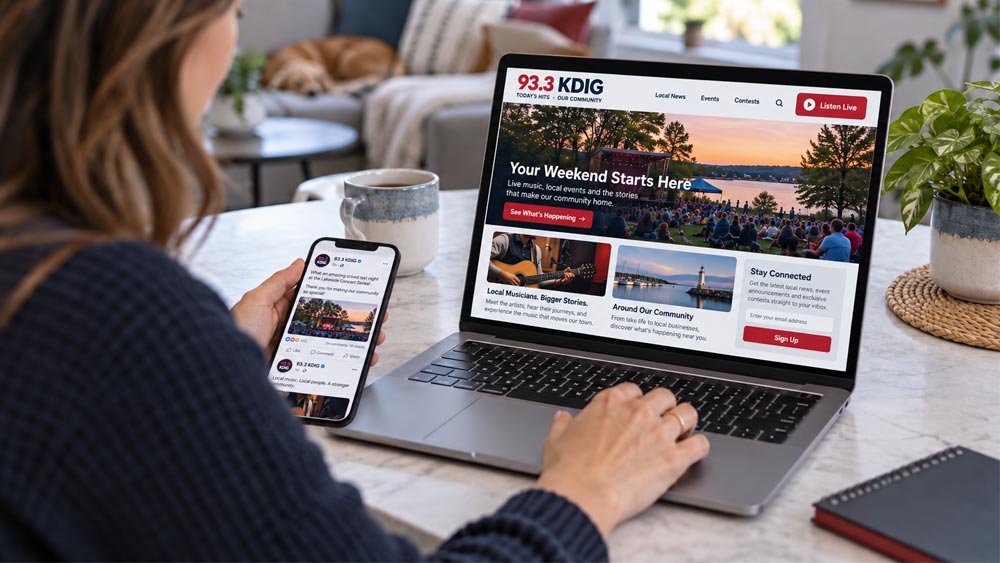
A station’s Facebook page can tell a very different story than its website. On Facebook, the staff finds it easy to share community events, post pictures, and promote contests. Visit the website, and you might wonder whether anyone has been updating it lately. The station is putting effort into connecting with its community, but much of that work depends on a post appearing while someone happens to be scrolling. If it never reaches them, do they have another way to hear about the contest, discover the event, or see what the station is doing?
A recent Social Media Today article gives us a reason to think about that. Pew Research Center found that 64% of American adults believe social media has been bad for democracy, unchanged from 2022. Negative views increased in 16 of the 26 countries where earlier data was available. Pew also found that 87% of Americans believe access to the internet and social media has made people easier to manipulate with false information and rumors. These findings don’t mean everyone is deleting their accounts, but they should make us reconsider how much of our audience connection depends on people wanting to spend time there.
We’ve spent years telling listeners to follow us on social media. We should put just as much, if not more, effort into giving them reasons to visit our websites, download our apps, and subscribe to our newsletters. Put the weekend events on the website, then highlight a few on Facebook. Give the morning show interview a home where people can find it later. Keep contest details and community resources on your website, so listeners know where to find them, even if they never see the social post. Social media still helps people discover us, but there should be somewhere useful to go from there.
That requires more than changing the destination in an on-air promo. “Visit our website” is a very weak invitation. Give them specific reasons like the current community calendar, local sports coverage, or a worthwhile list of weekend events. Explain that your app lets them listen in the car and keep up with local updates. Offer a Friday newsletter that helps them plan their weekend. A music station doesn’t have to become a newsroom, but each of these products needs a purpose beyond reminding people the station exists.
We can also use airtime to build those habits. Instead of automatically ending every mention with “check our Facebook page,” tell listeners where the complete festival schedule lives or what they’ll get in that weekly newsletter. Those visits and subscriptions can also support advertising opportunities the station sells. A sponsored events page or useful newsletter becomes more valuable when people return regularly. That starts with delivering something they want, then consistently reminding them it’s available.
Take a look at a week of your station’s social posts. How much useful content exists only there? As concerns about social media grow, we should be preparing for listeners who choose to spend less time on it. Use the attention you have there now to give people reasons to visit your website, download your app, and subscribe to your newsletter. Make those invitations part of your regular social content while you still have the opportunity to reach them. Even if a listener eventually cuts back on Facebook, staying connected with your station should already be part of their routine elsewhere.
Pic generated by ChatGPT.
Jim Sherwood is a radio veteran turned digital strategist dedicated to helping radio stations thrive online through engaging websites and mobile apps. As the founder of Skyrocket Radio and host of the Better Radio Websites podcast, he shares best practices to help stations grow audiences and revenue in the digital space. With decades of experience in radio and a passion for connecting content with listeners, Jim ensures that every station—no matter its size—can make a lasting impact online.