

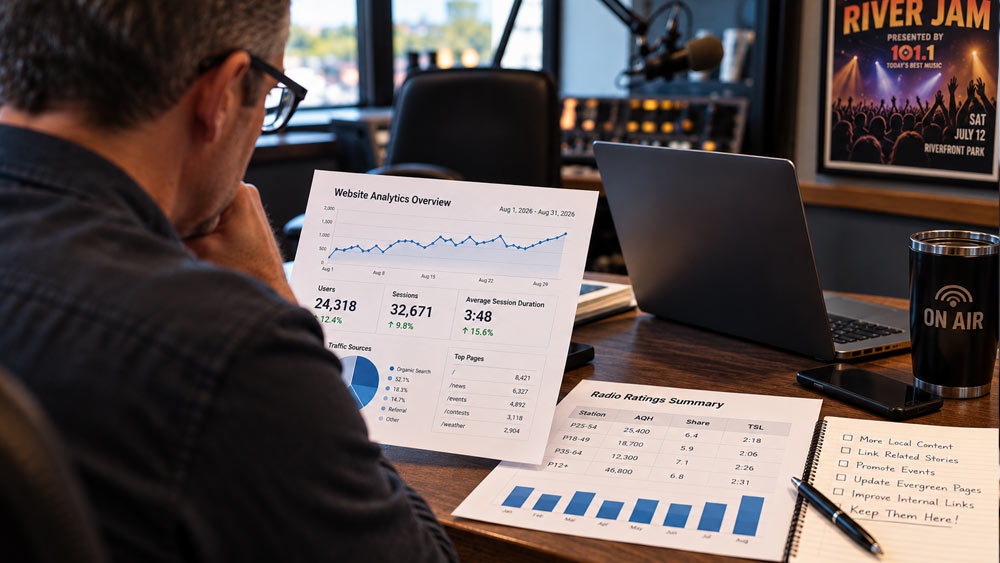
Radio people have spent decades talking about TSL – Time Spent Listening. Getting someone to tune in is important, but getting them to stay is where the real value starts to build. We tease what’s coming up, carefully schedule music, limit tune-outs and spend a lot of time thinking about what might cause somebody to reach for another station.
We should be thinking about our websites the same way.
Websites have essentially the same measurement. We commonly call it Time on Site, while Google Analytics today breaks engagement down into measurements such as average session duration and average engagement time. The terminology is different, but the question should sound very familiar to anyone in radio: We got them here. How long can we keep them?
That matters beyond simply being able to show a bigger number in an analytics report. Google doesn’t use your Google Analytics “Time on Site” number as a direct search ranking factor, but the things that tend to keep people engaged – useful original content, good internal linking, fast pages and a site that answers what someone came looking for – are also the things that make a website more useful and discoverable. As search continues to change and AI becomes another way people find information, building a site with depth, authority and clear connections between related local information becomes even more important.
Most radio people already understand this concept instinctively. If we can get someone through another song, another quarter-hour or another morning-show segment, we’ve earned more of their attention. On the website, getting someone to click a link is only the first win. What happens when they get there?
If they read the story they came for and immediately leave, you earned one pageview. If that story leads them to another story, an event, a contest or something else that interests them, you’ve started turning that visit into something much more valuable. Search rewards this type of engagement.
One of the easiest ways to do that is with related content. Someone who just read a story about a new restaurant opening downtown might also be interested in another recent restaurant opening, a local business directory or an upcoming downtown event. Related stories at the bottom of an article give them somewhere logical to go next instead of presenting them with a digital dead end.
Internal links within the story can do the same thing. If you’re writing about the county fair and mention that you’ve already published the entertainment schedule, link to it. If a story references something your station covered two weeks ago, link back to that story. You’re helping the reader get more information while also giving them another reason to stay on your site.
Your sidebar and the area below a story shouldn’t be wasted space, either. Most-read stories, latest local news, upcoming events, current contests and other regularly changing content can give someone several choices for what to do next. The important part is that those choices are useful. Filling every available inch of the page with links isn’t the goal. Giving the visitor a few good reasons to keep exploring is.
This is also one reason I like evergreen local content. A high school football guide, severe weather information, community calendar, lake guide or holiday events guide can become a hub with links to several other pieces of content. Someone may arrive looking for one answer and discover three other things worth reading.
Audio and video can help, too, when they’re actually connected to the content. A short interview clip accompanying a news story, highlights from Friday night’s game or video from a local event gives the visitor another way to engage without leaving your website. The key is relevance. Dropping a random video player onto every page isn’t going to magically make people stay longer.
And don’t overlook the obvious: your website needs to be fast and easy to use. We can create all the great content paths we want, but if pages take forever to load, popups cover the screen or the mobile experience is frustrating, we’re creating our own tune-out factor.
This doesn’t mean we should try to trap visitors on the website. Every additional click should earn itself by offering something useful or interesting. That’s really no different from programming a radio station. You don’t keep someone listening by making it difficult to turn you off. You keep them listening by continually giving them a reason not to.
The next time you look at one of your station’s news stories, don’t just ask whether the story is good. Scroll to the bottom and pretend you’re a listener who just finished reading it.
What are you giving them to do next?
That’s a question we’ve been asking for decades. We just called it TSL.
Pic generated by ChatGPT.
Jim Sherwood is a radio veteran turned digital strategist dedicated to helping radio stations thrive online through engaging websites and mobile apps. As the founder of Skyrocket Radio and host of the Better Radio Websites podcast, he shares best practices to help stations grow audiences and revenue in the digital space. With decades of experience in radio and a passion for connecting content with listeners, Jim ensures that every station—no matter its size—can make a lasting impact online.