

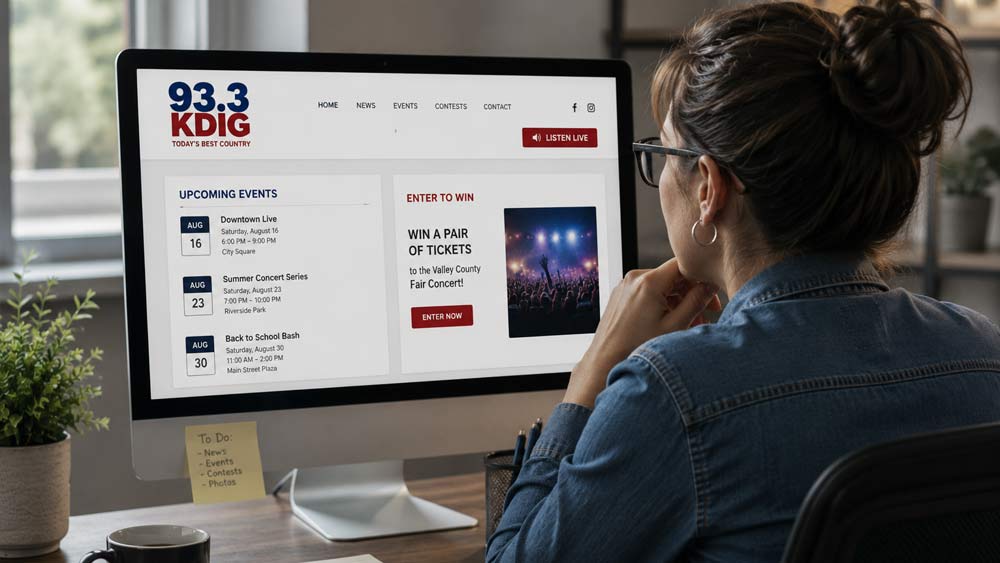
Every few years, it seems natural for a radio station to look at its website and wonder if it’s time for something new. Maybe the design is starting to look dated. Traffic isn’t growing the way you’d like. The staff isn’t particularly excited about using it. The mobile app isn’t getting much attention. Or maybe you’ve simply had the same setup for a long time and assume there must be something better out there by now.
Those can all be good reasons to take a closer look. But I wouldn’t start by looking at other websites or scheduling demos with providers.
I’d start with a different question:
What do we want our digital audience to do that they aren’t doing today?
That changes the conversation considerably.
Think beyond whether you like the design of the homepage. What role do you actually want the website to play for the station? Do you want listeners coming back every morning for local news? Checking high school football scores on Friday night? Finding community events? Entering contests? Listening to the station? Do you want more people opening your app during severe weather or subscribing to a newsletter that keeps them connected throughout the week?
Those are things you can build a digital strategy around. “We need a better website” really isn’t.
Once you know what you want the audience to do, you can start looking at what might be keeping that from happening. Sometimes the answer really is the technology. Other times, the website gets blamed for problems it didn’t create.
If a station publishes three local stories a month, putting those same three stories on a more modern website isn’t going to dramatically increase your traffic. If nobody promotes the website on the air, changing providers won’t fix that. If the newsletter isn’t growing because listeners are rarely given a reason to subscribe, changing email platforms won’t accomplish much either.
The same applies to a mobile app. A new app may look better and have more features, but if the station never gives listeners a reason to open it after they install it, the technology isn’t the problem.
This is why I think stations should occasionally evaluate the entire digital operation rather than just evaluating the website.
Look at website traffic, streaming, mobile app usage, newsletter subscribers and whatever other digital audiences you’re trying to grow. Where are you today? More importantly, where would you like those numbers to be a year from now? Then start asking what needs to change to get there.
Maybe publishing local news is too cumbersome, so the staff avoids doing it. Maybe your website, app and newsletter are three separate systems that require somebody to enter the same information three times. Maybe sending a push notification requires another login and another dashboard. Those are legitimate technology problems because they create friction that keeps the station from doing what it wants to do.
But maybe the tools are already there and nobody is using them. That’s an important distinction to make before replacing anything.
I’d have that conversation with the current provider, too. Instead of asking, “What other features do you have?” tell them what you’re trying to accomplish. We want to publish more local news, but the staff isn’t doing it consistently. We want more newsletter subscribers. We want listeners opening the app more often. We want the website to generate more revenue.
Ask what you’re already capable of doing that you may not be taking advantage of.
You may discover a better workflow, features you already have or something relatively simple that would help. And if your current platform really can’t support what you want to accomplish, you’ve learned something equally valuable. Now you know specifically what you should be looking for somewhere else.
I’d use the same thinking when deciding between managing things yourself and using a provider. There isn’t a universally correct answer. A station with someone on staff who understands the technology and has time to maintain it may be perfectly happy handling things internally. Another station may be much better served by having someone else handle updates, security, backups, integrations and the inevitable Saturday-morning problem nobody planned for.
What matters is whether the arrangement helps the station do what it has decided is important.
The same goes for feature lists. More isn’t automatically better. If your staff has to bounce between five dashboards and remember four passwords to maintain your digital presence, all those capabilities aren’t necessarily helping. Every extra step creates a little more friction, and enough friction eventually means something doesn’t get done.
This is why I wouldn’t make “Do we need a new website?” the first question in a digital review. I’d start with the audience.
What do we want more listeners doing online? What do we want them doing more often? What would make our website, app or newsletter more useful to them? What numbers do we want to grow over the next year?
Once you have those answers, take a hard look at the technology, content, promotion and people required to get there. You may decide you need a new website. You may also discover you already have the website you need. You just need a better plan for what to do with it.
Pic generated by ChatGPT.
Jim Sherwood is a radio veteran turned digital strategist dedicated to helping radio stations thrive online through engaging websites and mobile apps. As the founder of Skyrocket Radio and host of the Better Radio Websites podcast, he shares best practices to help stations grow audiences and revenue in the digital space. With decades of experience in radio and a passion for connecting content with listeners, Jim ensures that every station—no matter its size—can make a lasting impact online.