

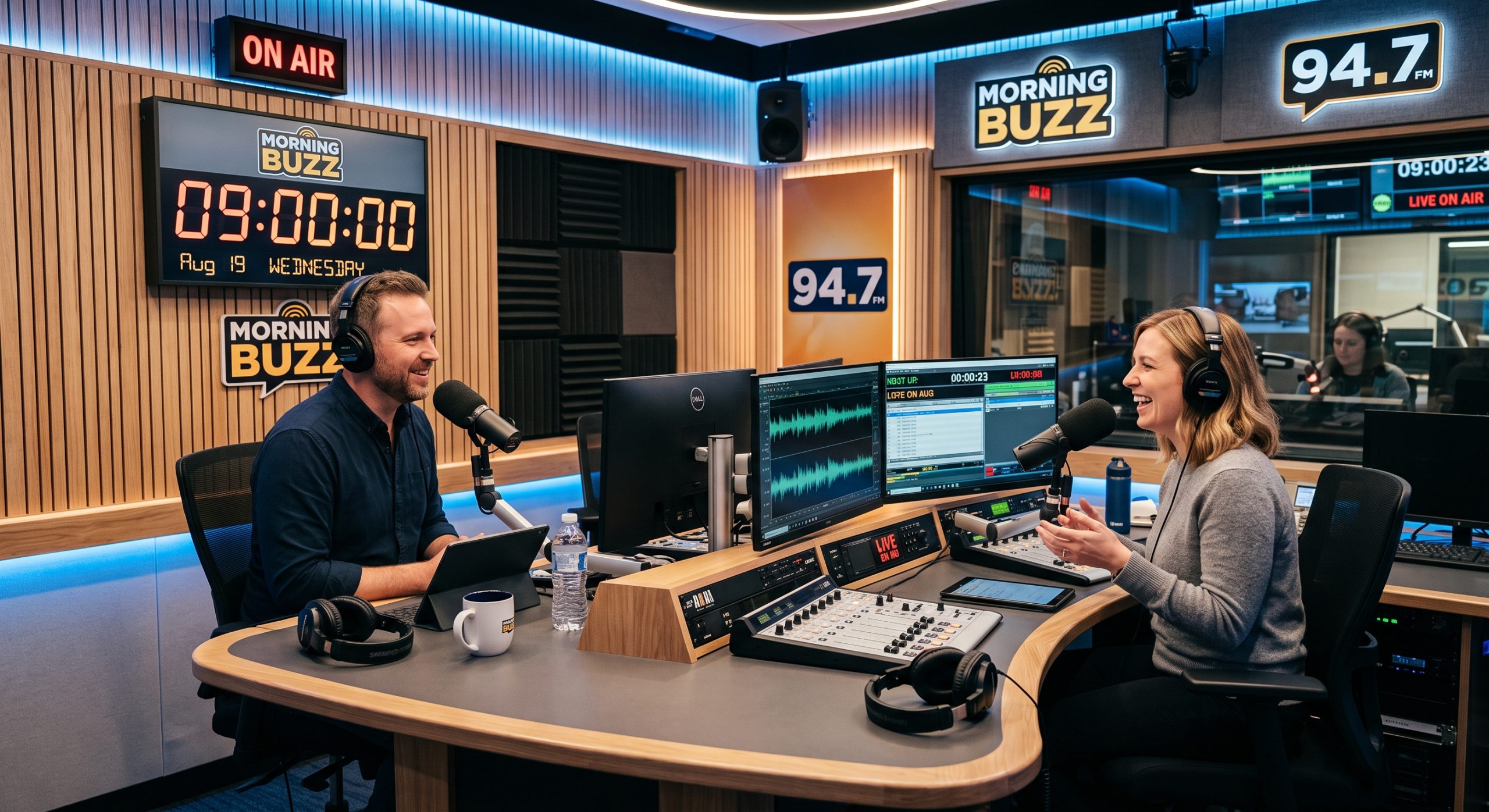
Easily 90% of the morning shows I’ve worked with over the past decade are live from 6am to 9am and voicetracked from 9am to 10am. Which is understandable. With everyone wearing multiple hats it’s hard for stations to justify any live four-hour air shifts, even in our most important daypart. Plus, most research tells you that the 9am hour is really more like a midday hour anyway with the majority of listeners already at work by then. So, we’ve all collectively decided to just focus on being live for 3 hours every morning and pre-recording that last hour. However, since most shows voicetrack day of, that often means we’re really just live from 6am to 8:30am and the back half of the 8am hour is spent tracking. That or shows do it before they go on at 6am, cutting into their prep time. Outside of mornings it gets even worse, most midday shifts are only live during the noon hour now, afternoon shows are lucky to get two hours live and there’s only a handful of live and local night shows left in the entire country. Wouldn’t a better approach be to just shorten the shifts to whatever we can do live? I believe so, here’s my argument for why.
The main reason we do four-hour on-air shifts in drive time and five-hour shifts in middays and nights is because it’s the industry standard, especially on music stations. It’s the way we’ve always done it. Meaning it’s also the way Nielsen, agencies and other ad buyers break out the dayparts. But, I don’t think that’s enough of a reason anymore because A) they’ll adjust if enough of us adjust and B) the main thing that matters to any of those parties is how many people are listening.
Listeners are also wise to the fact that we’re prerecorded much more than we’re live. When automation systems gave us the ability to start voicetracking, broadcast companies took full advantage of that and ran with it. Initially, listeners were none the wiser because we coached up our talent to sound like they were live during voicetracks and never admit when it’s pre-recorded. We’ve all had the scenario where we ran into someone we know during an hour we’re on the air and they go ‘Hey, I just heard you on the radio,’ Typically I’d respond with some cheesy joke about how fast I was or something along those lines. At this point I think the jig is up. Listeners may not know the correct terminology but years of calling into studios where no one answered the phone and hearing canned talent avoiding anything timely and topical they’d have to re-record if it changes, have shed light on our pre-recorded secret.
Of course, the big reason stations are voicetracking so many hours is to save money. If budgets allowed everyone would be live and local from 6am to midnight every weekday. Since the voicetracking era started stations typically hire the best talent their budget allows and then use tracking to spread that talent out as much as possible to hopefully cover those eighteen hours. Then further spread them out by having the local talent track shifts on other company stations. The end result of that is turning on-air personalities into liner jocks that do little more than ‘that was and this is’, maybe goof on the song title, mention the weather listeners already got off their phone and read sales heavy station liners. Which adds no more value than an AI voice.
That’s why my main argument for why we should shorten shifts is because it will allow our radio personalities to create better radio. Focusing on only being live allows on-air talent to be timely, topical and interactive. Taking and airing phone calls, responding to comments in real time, video livestreaming the show to YouTube/Social/Website, banking video from the whole show to turn the highlights into shortform clips (using AI), concentrating on their best content to reduce the filler content, creating appointment setting benchmarks and segments that stick with listeners and spark conversations.
Creating better radio at the local level leads to more local revenue, which is the key to saving our industry.
But, what do you think? Should we shorten our shifts? Comment below or email me at Andy@RadioStationConsultant.com.
Pic AI generated using Gemini.
Andy Meadows is the Chief Editor of Radio Update and the owner of Radio Station Consultant where he consults radio stations across the country on programming and digital.