

AM/FM radio accounts for 56% of all in-car audio time according to Edison Research’s Share of the Ear study for the second quarter of 2025. This is more than four times the share of SiriusXM and six times that of Spotify’s ad-free subscription service.
When focusing solely on ad-supported listening, AM/FM’s lead is even larger, commanding an 85% share of in-car ad-supported audio.
Radio Thrives
With so many listeners coming to radio, the TV audience is shrinking. In cable TV, CNN has suffered a dramatic collapse in viewership, down 42% in one year. It’s a stunning blow to one of America’s most storied news networks. Nielsen data reveals that CNN’s total viewership is just 353,000, half of MSNBC, and just a sixth of Fox News Channel. In July, Fox News network was TV’s highest-rated network, topping broadcast networks ABC, NBC, and CBS in primetime. Meanwhile, CNN is shrinking.

Radio beats CNN!
In the 40 largest markets, over 280 US radio stations have more weekly listeners in their metro than CNN has viewers nationally. WINS, New York’s all-news station, has over five times as many listeners in the New York Metro as CNN has viewers in the US.
Streaming Grows
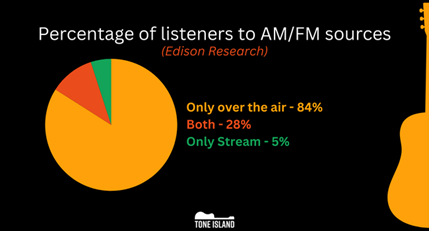
More people are turning to online radio. In the US, 84% of those who listen to AM/FM radio daily listen only over the air, 5% listen only via streaming, and 11% listen via a mix of both over-the-air and online streaming—source: Edison Research, quoted by Tone Island.
Eight Reasons Why Radio Is Successful (Yes, really successful.)
- Mass Reach, Fast
Radio reaches more people, more often, and more quickly than just about anything else—without asking them to download an app, create a password, or remember where they put their glasses. - Local Connection
Radio knows your town, your weather, your traffic, and which intersection is always backed up for no apparent reason. National platforms can’t pronounce your street names—radio lives on them. - Habit and Routine
People don’t decide to listen to radio, they do. Morning drive, workday, commute home. It’s automatic, like brushing your teeth… except radio doesn’t judge you if you skip a day. - Companionship
Radio keeps you company. A good air talent feels like a friend riding shotgun, sitting in the office, or keeping you awake on a long drive without eating your snacks. - Simplicity and Convenience
Turn it on, and it works. No buffering. No spinning wheel. No “Are you still listening?” Radio assumes you are and doesn’t take it personally if you’re not. - Trust and Credibility
Listeners trust their favorite stations and personalities. That trust carries over to advertisers, which is why radio endorsements still outperform ads that sound like a committee of robots wrote them. - Advertising That Actually Works
Radio reaches people while they’re doing things—driving, shopping, working, living life. In other words, when money is within arm’s reach. - Adaptability and Resilience
Radio has survived television, FM, cassettes, CDs, iPods, streaming, podcasts, and more “radio killers” than a slasher movie. Spoiler alert: radio’s still standing.
Bottom line:
Radio works because it’s local, human, easy, trusted—and remarkably hard to kill. When done right, it’s not just audio; it’s part of everyday life.
Pic designed by gpointstudio for Freepik.com.
John Lund is President of the Lund Media Group, a radio programming consulting firm with specialists in all mainstream radio formats. Did you find this article useful? You can leave a comment below or email John at John@Lundradio.com.