


This article’s title is weird. Nobody wants complaints because getting them is a pain to deal with. Today, everyone is so easily triggered to cancel anything they find offensive. But in personality radio, complaints are important. Most radio shows don’t get enough complaints, and the fear of complaints prevents your success. It keeps you stuck in the Zone Of Mediocrity when you could be basking in The Prolific Personality Zone.
Fear Of Complaints Is Killing Your Show
Imagine the most popular brands in the world. Everyone would love a public profile like Apple, Starbucks, or the New York Yankees. These brands have massive followings and great interest in everything they do. But popularity cuts both ways.
The passion that produces a large fan base also carries negative feedback. You can’t have a strong following (large fan base) without attracting some haters.
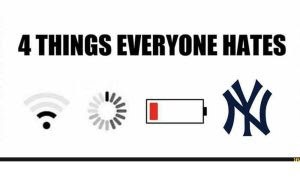
Apple is one of the most valuable brands in the world, and there is a large anti-Apple community. The interweb is filled with people complaining as soon as a new I-Device is released.
The New York Yankees are among the world’s most recognized and popular sports franchises. They are also the world’s most hated team, at least until the Dodgers became the new Public Enemy #1.
Howard Stern has one of the largest radio audiences in history. He gets more time spent listening from those who say they hate him than those who say they love him.
Meanwhile, many stations cruise through weeks, months, and even years without complainers. That’s not a good sign. Those stations are likely in the Zone of Mediocrity. There’s a better “zone” to strive for.
Good Complaints vs. Bad Complaints
Going out of your way to cause listeners to complain isn’t the objective, but neither is avoiding complaints at all costs. Never ignore complaints. Listeners who take the time to comment deserve a response. But all complaints are not equal. Learn to identify good complaints from bad ones.
Good complaints happen when personalities perform at the extremes of their character. Start with a Character Profile to identify the boundaries of good taste for each air personality.
Complaints about content within the boundaries are good. However, if the content violates the brand values defined in the profile, it’s a bad complaint and should be addressed.
This inspires confidence and makes it much easier to perform.
Note: Never try to argue with complainers. It doesn’t work.
The Prolific Zone
The Prolific Index was created by Russel Brunson, founder of ClickFunnels.com.
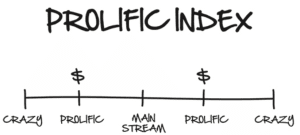
Think of your ability to attract a fan base on The Prolific Index scale. The most interesting personalities cause fans to love and relate to them. That love is never inspired by ordinary talent nor at the extreme edges of the Prolific Index.
He points out that an audience must be fascinated with a personality to become fans. Further, only prolific personalities command fascination. Notice the “crazy zone” at the polar ends of the scale. That’s beyond the edge of extreme reason. There may be an audience for it, but it’s not large enough to matter.
Your goal should be to stay out of the mainstream middle and live in the Prolific Zone, but the fear of complaints keeps pulling you back to the middle like a magnet. The most successful talent shares perspectives, quirks, and opinions while enhancing likable traits and qualities. Complaints come with it, but that’s what it takes to attract a large audience.
Conclusion
Don’t try to drive people away to generate complaints to earn fans. That doesn’t make sense. But a positive reaction is not the absence of negative comments.
How is the feedback trending on your show? Chances are, there aren’t enough complaints. Maybe you should adjust your approach!
Pic designed by rawpixel for Envato Elements.
Tracy Johnson is a talent coach and programming consultant. He’s the President/CEO of Tracy Johnson Media Group. His book Morning Radio has been described as The Bible of Personality Radio and has been used by personalities worldwide.