

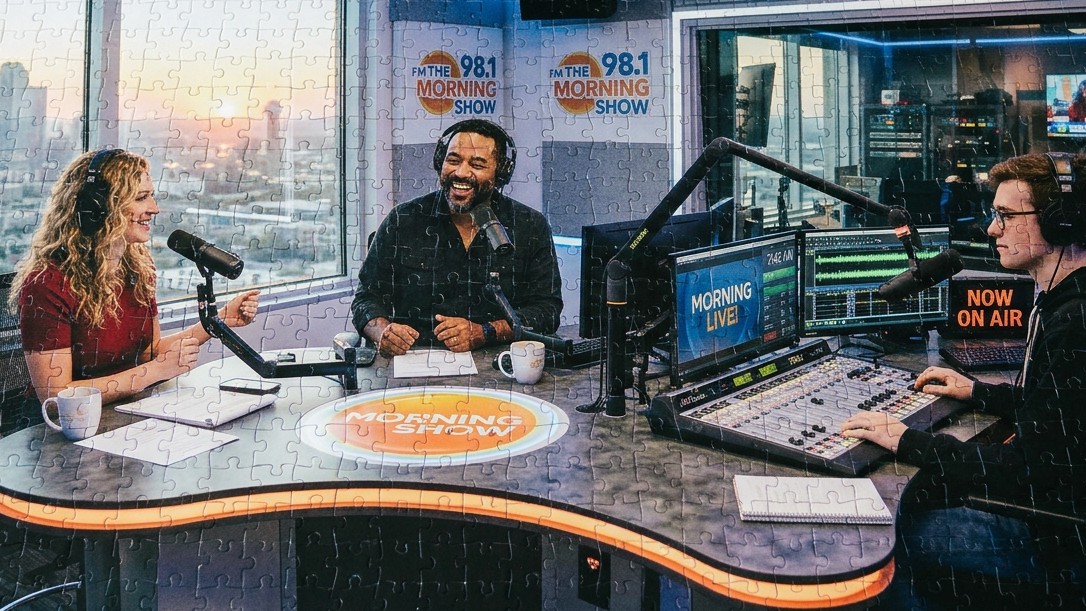
Great morning shows sound spontaneous, conversational, fun, and occasionally a little dangerous. But behind the scenes, the best ones are highly organized. “Winging it” is not a strategic plan. It’s what chickens do.
Here are the essentials for building a morning show that listeners want to make part of their daily routine.
- Know Exactly Who You’re Talking To
Before opening the mic, picture the target listener. What happened in that person’s life at 7:15 this morning? Getting kids ready? Driving to work? Fighting traffic? Already answering emails? Don’t broadcast to an “audience.” Talk to one person.
- Define the Cast
On multi-person shows, everyone needs a recognizable role. Who’s the storyteller? The instigator? The voice of reason? The pop-culture expert? The person most likely to say what the listener is thinking? Great chemistry comes from authentic personalities, not three people fighting for the punchline.
- Own the Market
Localism is a morning-show superpower. Mention what listeners see, experience, complain about, celebrate, and discuss where they live. Weather should be useful, not merely meteorological. Don’t just say it will snow—tell listeners the commute could take an extra 15 minutes. Aim for several meaningful local touches every hour.
- Talk About Real Life
Relationships. Kids. Parents. Dating. Marriage. Work. Money. Friends. Shopping. Health. The impossible co-worker. The group text that suddenly became World War III. The strongest morning-show content produces one reaction: “That happens to me, too!” Relatability beats cleverness.
- Curate Pop Culture
Know what your target is watching, streaming, sharing, and talking about. Cover the stars, shows, movies, viral moments, and social-media debates listeners will discuss later that day. Don’t simply report entertainment news. Have an opinion, reaction, question, or personal connection.
- Create Appointment Listening
Build memorable benchmarks at consistent times: trivia, contests, entertainment updates, good-news features, listener dilemmas, games, or recurring characters. Promote them ahead. A benchmark nobody knows is coming is merely something that happened.
- Invite the Audience into the Show
Calls, texts, voice messages, polls, and social posts transform listeners from spectators into participants. Ask questions people can answer instantly. And use social media as an extension of the show—not a dusty bulletin board last updated when skinny jeans were fashionable.
- Make It Sound Alive
Use callers, audio clips, production, music beds, sound effects, and great imaging. Audio creates theater of the mind. Morning radio should sound like something is happening.
The Lund Lesson
A great morning show combines personality + preparation + localism + relatability + interaction + entertainment. Every break should give listeners a reason to listen now—and another reason to come back tomorrow.
The Lund Challenge
Before tomorrow’s show, answer three questions: Who are we talking to? What are they talking about today? And what will we do this morning that they’ll remember tonight? If you can answer all three, you’re not just filling four hours. You’re building a morning habit.
Pic AI generated using Gemini.
John Lund is President of the Lund Media Group, a radio programming, broadcast consulting, and research firm with specialists in all mainstream radio formats.