

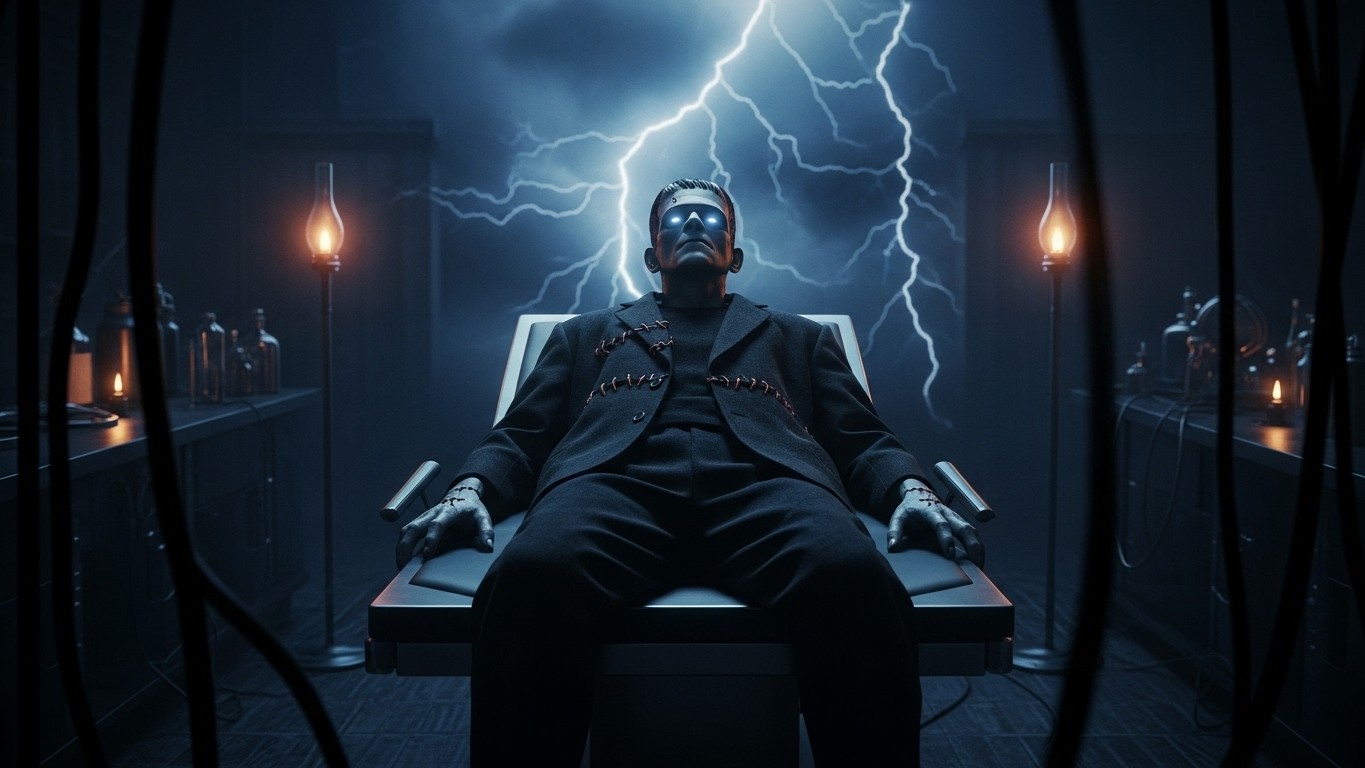
Radio programmers love to say, “We need more energy!” It’s like telling a band, “Play better!” Sure, it sounds helpful, but what does it actually mean?
In most cases, the message gets lost in translation. Personalities interpret “add energy” as “talk faster,” “shout more,” or “slam some uptempo techno under the break and hope for the best.” Suddenly, your midday host sounds like a used car dealer on the last day of a blowout tent sale.
But here’s the secret: Energy isn’t about volume. It’s about voltage.
It’s not the decibels that matter—it’s the words.
The Energy of Language
Real energy comes from action-packed, visual, emotionally charged language. And unfortunately, that’s almost never what gets coached. Why? Because telling someone to yell is easier than showing them how to ignite imagination.
Legendary advertising exec David Ogilvy once said:
“If it doesn’t sell, it isn’t creative.”
Well, if it doesn’t compel, it isn’t energetic.
Let’s play a little game. You’re scrolling your social media feed. Which headline makes you stop?
- Get details about a popular new diet
- Lose 15 pounds this month with this strange, but groundbreaking, diet plan
One sounds like a librarian wrote it. The other sounds like you’d click it while eating chips.
Apply this to talk segments, and you can hear the difference instantly.
- What incident happened in your high school that everyone talked about?
versus
- What scandal rocked your high school?
Boom. One is a prompt. The other is a spark.
The “Oh Wow” Effect
Words have emotional horsepower. When you inject vivid verbs and loaded nouns, you’re not just talking—you’re painting with sound.
Think of your topic like a party invitation. “Want to come over?” is fine.
But “I’m throwing a rooftop bash with margaritas, scandalous stories, and a DJ named Bacon Bits” has people checking their calendars.
Here’s another example:
- Ordinary Topic: “What did your kid do to embarrass you in public?”
- Energized Version: “What did your kid do that made you want to change your name and move out of the neighborhood?”
Suddenly, you’re not fishing for generic anecdotes—you’re baiting the kind of content people bring up at dinner parties.
Don’t Settle for“Fine.” You Want Fire.
There’s a reason most radio shows are described as “pretty good.” That’s the feedback equivalent of a limp handshake.
Compare these listener reactions:
“Yeah, it was fun. I liked it.”
“OH MY GOD, did you hear that woman’s story on Peppy and Zippy? I was in the driveway for 10 minutes waiting to hear how it ended!”
When was the last time someone couldn’t turn your show off?
That’s the energy gap. It’s not about shouting. It’s about shocking. Or seducing. Or tickling the imagination just enough that the brain says: “I have to know what happens next.”
Let’s Steal a Page from Hollywood
Screenwriters know this trick by heart. They don’t say:
“A guy gets stuck on Mars.”
They say:
“He’s 140 million miles from Earth with 30 days of food and a lifetime supply of sass.”
And voilà: The Martian.
In the same way, you’re not just asking:
“What weird thing happened at your school?”
You’re inviting:
*“Tell us the high school scandal that lives on in legend.”
Final Thought: Energy Is a Feeling, Not a Frequency
Don’t coach your team to be louder. Coach them to be more electric.
Teach them to turn mundane into magnetic. Routine into riveting.
Because when you crank up the energy in your words, you don’t need to crank up the volume in your voice.
And just like that, listeners stop saying “That was fine” and start saying, “Did you hear what they said this morning!?”
That’s the moment your show becomes unforgettable.
Want more tips like this? Try rewriting your next show tease using the “Crank It Up” method. Start with your basic topic. Then punch it up. Verb it. Visualize it. Feel the difference.
Now go. Light it up. Crank it up.
Pic AI generated by Envato Elements.
Tracy Johnson is a talent coach and programming consultant. He’s the President/CEO of Tracy Johnson Media Group. His book Morning Radio has been described as The Bible of Personality Radio and has been used by personalities worldwide. Tracy is also the creator of Radio Content Pro an AI-powered show prep service that addresses all three of these triple threat filters by putting stories in radio speak and giving you teases, on-air copy, responses, phone topics, social copy by platform, blog copy and more.